Decarbonization
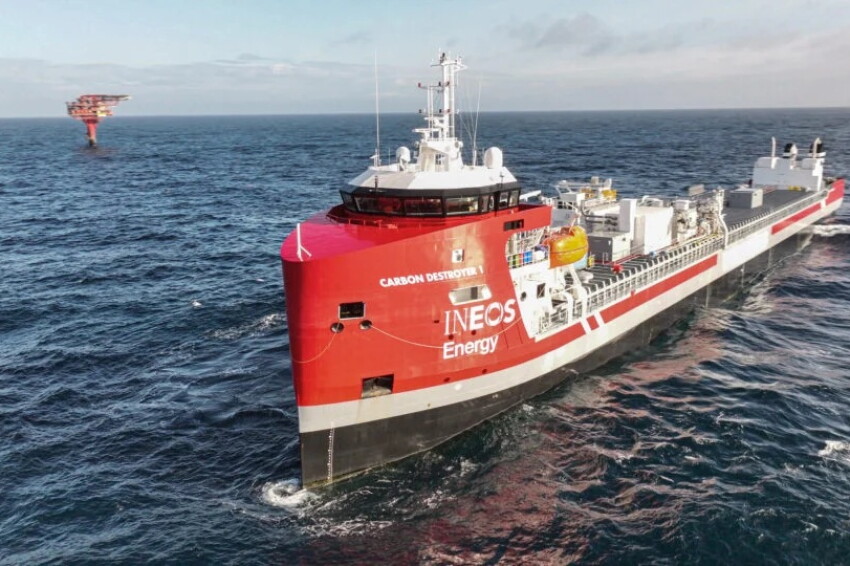
Plans call for the Greensand project to store 400,000 tonnes of carbon dioxide annually, with the potential to store up to 8 million tonnes annually at full capacity.
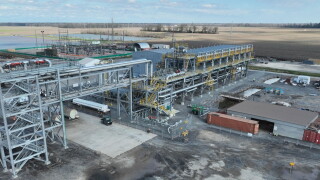
In line with its recently released Global Outlook, the major has begun storing carbon dioxide from Nucor’s iron facility in Convent, Louisiana.
Natural Resources Canada has awarded $4 million to Next Hydrogen and CERT Systems to advance clean hydrogen production and low-carbon sustainable aviation fuel technologies in the Greater Toronto Area.
-
 This paper assesses the technical feasibility of geological carbon storage in the operator’s Brazilian brownfields, focusing on mature oil fields and associated saline aquifers.
 -
This study illustrates the new capabilities, tailored for carbon-dioxide storage applications, of a modeling framework that provides a quantitative, risk-based assessment of the long-term integrity of legacy plugged and abandoned wells.
-
The latest corporate plan drops the amount the company says it will invest in low-carbon efforts by $10 billion from last year’s plan.
-
Following the start of injection in August, Northern Lights has issued the first set of certificates documenting that the carbon dioxide captured from the Heidelberg Materials cement factory has been transported and stored permanently in the Aurora reservoir.
-
As COP30 wrapped up in Brazil, the country finds itself at an inflection point, positioned to deliver South America’s first carbon-dioxide injection by mid-2026.
-
The 14 available locations are estimated to be able to provide up to 2 gigatonnes of additional carbon-dioxide storage capacity.
-
The authors state that issues faced by the Gorgon carbon capture and storage project primarily relate to risk and pressure management of the produced water from the Dupuy formation rather than from capture, transport, injection, and storage technologies.
-
This study ascertains the capital expenditure and operating expenditure associated with the reuse of existing facilities, specifically regarding a carbon capture and storage project being prepared in South Korea.
-
The ruling means the state will take over permitting and enforcement of EPA regulations pertaining to all classes of wells, including injection wells for carbon dioxide storage.
-
Petronas CCS Ventures receives Malaysia’s first offshore assessment permit for carbon capture and storage in the Duyong field offshore Peninsular Malaysia.