Decommissioning

The North Sea Transition Authority has published its first table identifying 13 operators that are behind schedule in decommissioning their inactive North Sea wells.

Estimates commissioned by the Australian government suggest that increasing efficiency will lower costs for decommissioning offshore Australia.

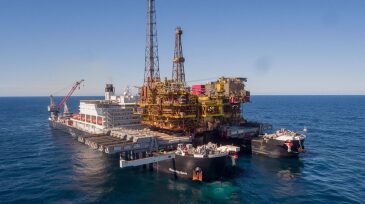
Marine contractor also approves the construction of a new heavy-transport ship.
-
 When a new horizontal well in Asia was incapable of unassisted flow, coiled tubing (CT) was selected for the perforation and stimulation intervention. Mechanical isolation was required to ensure that the stimulation fluids entered only the new zones.
 -
Bureau Veritas made available its guide to decommissioning regulations in the UK Continental Shelf.
-
Bureau Veritas made available its guide to decommissioning regulations in the UK continental shelf.
-
Global spending on oil and gas decommissioning is expected to be $13 billion per year by 2040. The launch of a collaborative supply chain approach to global decommissioning offers an end-to-end solution to reduce the decommissioning burden, risk, and cost for operators in Europe, Asia, and Americas.
-
The joint venture will include work on P&A, towage of floating units, and removal of subsea infrastructure, with the ultimate goal of providing the full end-to-end process for decommissioning.
-
Many operators are taking a full-life-cycle approach to preparing for decommissioning—a shift borne of necessity amid cost and regulatory constraints.
-
With no money to be made, P&A is one area where operators can put aside their hyper-competitiveness to work together. Members of the recently formed PACE network discussed the virtues of collaboration at the Decommissioning and Abandonment Summit 2018.
-
With $102 billion of decommissioning-related expenditure forecast to 2040 in Western Europe, opportunities are ripe for the supply chain to compete with innovative and cost-effective solutions for the E&P operators.
-
The shutting in of unprofitable offshore wells and the requirements for their plugging and abandonment is attracting more attention to what is being done with the associated subsea equipment. The benefits of leaving subsea systems in place vs. recovering them are being considered.
-
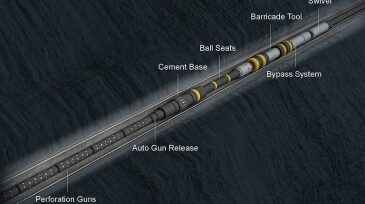
Archer’s Stronghold Barricade well decommissioning system leaves the casing in place, while perforating, washing, and cementing the annulus to create a cement barrier in a single trip.