Digital Oil Field

This research focuses on combining physics-based expert rules with machine learning to improve the detection of failure-related events in electrical submersible pumps.

This paper presents the deployment of an artificial intelligence-enabled autonomous gas lift optimization system, integrating real-time centralized advanced process control with cloud-based analytics to enhance artificial gas lift performance in producer wells.

A combination of physics principles and machine-learning techniques is used in this work to develop a virtual flowmeter for oil-production optimization in electrical-submersible-pump-lifted oil wells, resulting in reliable generalization.
-
Edge—or, in-field, device-level—computing is being driven by the need for data from individual wells to be analyzed and processed at the wellsite instead of in data centers for early and accurate decision making.
-
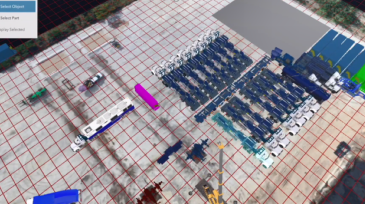
 Immersive technology on projects such as wellsite planning incorporates XR, drones, and collaboration.
 -
Production monitoring requires heightened degrees of precision and efficiency as operations are streamlined and projects are evaluated continuously. This month’s feature focuses on innovative technologies that have been implemented in environments ranging from the Gulf of Mexico to China.
-
This paper describes a virtual metering tool that can monitor well performance and estimate production rates using real-time data and analytical models, integrating commercial software with an optimization algorithm that combines production and reservoir information.
-
This paper discusses the effectiveness of third-generation (Gen3) production-logging-tool (PLT) technology, which uses co-located digital sensors for simultaneous acquisition of flow data to provide the most accurate characterization of the flow condition at each depth surveyed.
-
This paper describes an accurate, three-step, machine-learning-based early warning system that has been used to monitor production and guide strategy in the Shengli field.
-
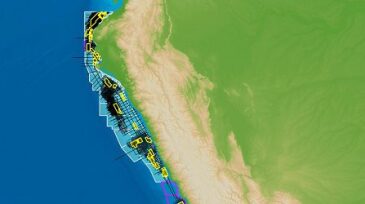
The seismic-data company has announced the completion of its offshore Peru 2D and 3D seismic data set, consisting of 19 rectified and merged 2D seismic surveys and 21 rectified and merged 3D seismic surveys.
-
In my inaugural column as editor of the Well Testing Technology Focus feature, I want to shine a light on the notable trend among operators of seizing on the tremendous untapped potential that exploration and appraisal wells represent for far-field reservoir characterization and connectivity.
-
This paper describes the use of a downhole temperature-sensor array during a commingled drillstem test (DST) to determine the density of produced fluids accurately.
-
This paper applies a new constrained multiwell deconvolution algorithm to two field cases: a gas reservoir with two producers and an oil reservoir with three producers and one injector.