Digital Oil Field

The paper presents the design and successful field deployment of the first closed-loop hydraulic fracturing program.

The authors write that by replacing outdated, labor-intensive processes with an integrated, cloud-based platform, companies can streamline planning, improve accuracy, and foster better coordination across teams and vendors.

This paper presents the first global application of autonomous drilling in deepwater and the journey to reach optimal drilling parameters, integrating proprietary tools from the project’s business partners.
-
 At the recent Unconventional Resources Technical Conference in Denver, a direct measurement of what is downhole was a theme of new products offered to operators who see the need for more data on what is working, what is not working, and what could be made to work better.
 -
This paper presents a new approach in monitoring the hydraulic system and in the recognition of well‑control events at an early stage such that proper counteractions can be initiated before any damage occurs.
-
This paper describes field experiences and perspectives on a Smart Fields implementation for the Bonga deepwater field and uses the results of a post-implementation study to evaluate the business effects and lessons learned after 5 years.
-
The world’s first offshore gas-hydrate production was carried out successfully in deepwater Japan at Nankai trough in 2013.
-
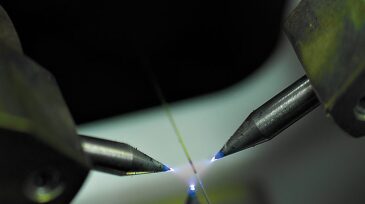
It has been an impressive comeback for a technology that once stood on the brink of failure. The upstream oil and gas industry has largely resolved crippling technical challenges that shortened the life of fiber-optic cables in downhole applications and is now working on a big encore.
-
A reservoir-monitoring system has been installed on a medium-heavy-oil onshore field in the context of redevelopment by gravity-assisted steamflood.
-
This paper addresses the architecture, implementation, and benefits of complex-event processing (CEP) as a solution for the intelligent field.
-
What is taking so long? Well, more than a decade into the intelligent-fields initiative, this is a question that remains prominent.
-
This paper describes the design, testing, installation, and performance of the first fully completed well using an intelligent inner completion inside an uncemented liner with openhole packers for zonal isolation.
-
This study develops a workflow to design a proactive workover-optimization workflow by use of genetic algorithms (GAs).