Digital Oil Field

The Seismos full-scale research center opens to industry, universities, and national laboratories, advancing acoustic sensing across upstream energy, pipelines, critical infrastructure, and national security.

This research focuses on combining physics-based expert rules with machine learning to improve the detection of failure-related events in electrical submersible pumps.

A combination of physics principles and machine-learning techniques is used in this work to develop a virtual flowmeter for oil-production optimization in electrical-submersible-pump-lifted oil wells, resulting in reliable generalization.
-
 This paper describes the use of a downhole temperature-sensor array during a commingled drillstem test (DST) to determine the density of produced fluids accurately.
 -
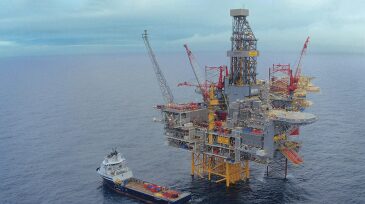
The complete paper describes the shortcomings of traditional well testing methods and the methodology and results of applying wireline-conveyed IPTT in a light-oil reservoir offshore Norway.
-
To predict liquid-loading tendencies and to identify opportunities for production enhancement, the performance of 150 gas wells was analyzed in two gas fields in India.
-
Welcome to the debut of the Digital Data Acquisition feature. The new feature comes from the desire of readers and reviewers to broaden the scope of JPT’s coverage of developments related to digital transformation and the applications that the industry can derive from these exciting possibilities.
-
This paper describes the development and field trials of a cloud-connected, wireless intelligent completion system that enables long-term monitoring and interval control to enhance production management by connecting the user wirelessly from the desktop to downhole inflow-control valves.
-
Digital twins are powerful combinations of models and data that “age” throughout the lifecycle of an asset as they gather and integrate data from the field. This technology is a quantum leap from earlier efforts at modeling complex systems.
-
The international major is calling its latest multiwell project in the Permian Basin a “beacon of innovation.” The goal is to see if combining digital technologies will lower the operating costs of its shale assets.
-
The complete paper describes the development of a smart robotic inspection system for noncontact condition monitoring and fault detection in buried pipelines.
-
A proving ground for the use of digital twins has emerged in the North Sea. There, operators Total, Aker BP, and Shell have each developed and deployed twins that they expect to pay big dividends.
-
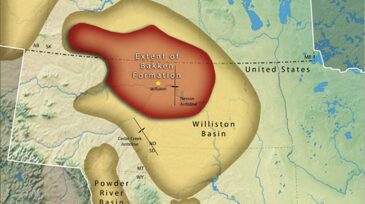
Multistage horizontal well designs were first implemented in the Bakken in 2007. Since then, more than 12,000 wells have been completed in either the Middle Bakken or Three Forks zones.