Digital Oil Field

The Seismos full-scale research center opens to industry, universities, and national laboratories, advancing acoustic sensing across upstream energy, pipelines, critical infrastructure, and national security.

This research focuses on combining physics-based expert rules with machine learning to improve the detection of failure-related events in electrical submersible pumps.

A combination of physics principles and machine-learning techniques is used in this work to develop a virtual flowmeter for oil-production optimization in electrical-submersible-pump-lifted oil wells, resulting in reliable generalization.
-
 Visualization technology has played a key role in reducing operational expenditure (OPEX) and improving collaboration, thus maximizing uptime across the industry throughout the asset life cycle.
 -
A recently released report predicted that IoT networks will not take up as much of the overall market share as previously anticipated.
-
Distributed temperature sensing (DTS) is the most common fiber-optic measurement used for steam-assisted-gravity-drainage reservoir monitoring.
-
Although early inflow control devices and intelligent completions (ICs) were introduced almost 20 years ago, completion technology has not kept pace with advancements in drilling technology.
-
As the drilling industry improves its efforts to capture drilling operation activities in real time, it has generated a significant amount of data that drilling engineers cannot process on their own.
-
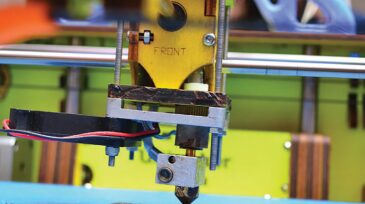
Researchers at Heriot-Watt University in Edinburgh, Scotland, are building replica core samples using 3D printers and installing sensors inside them as they go. Their goal is to directly monitor pore-scale flow behavior from the inside of these so-called “smart rocks.”
-
A real-time method is presented to predict impending stuck pipe with sufficient warning to prevent it. The new method uses automated analysis of real-time modeling coupled with real-time-data analysis.
-
Over the last couple of decades, we have seen a steady stream of “intelligent” innovations go from ideas to infancy to catalog solutions.
-
Permanent downhole gauges (PDGs) can provide a continuous record of flow rate and pressure, which provides extensive information about the reservoir. In this work, a machine-learning framework based on PDG data was extended to two applications: multiwell testing and flow-rate reconstruction.
-
This paper describes an “active” monitoring technique that uses a direct search method to optimize the sequence of interval-control-valve (ICV) positions during a routine multirate test in an I-well.