

Drilling/completion fluids

This paper presents the application of degradable particulate-diverter technology to improve oil production by effectively diverting stimulation treatment fluids away from high-water-cut, high-permeability, high-temperature producing intervals or zones.

This paper presents the methodology for developing drill-in organophilic clay-free invert-emulsion-fluid technology that enhances well production through fundamental geological studies and fluid testing.

This paper presents the large-scale deployment and operational integration of an advanced, automated rheometer in the Ghawar gas field, one of the world’s most prolific and technically complex hydrocarbon developments.
-
 When oil-based mud is used, the drilled formation solids (cuttings) are regarded as controlled or hazardous waste.
-
A novel nonaqueous-fluid (NAF) system was designed to provide stable rheological properties with a nonprogressive gel structure and very good filtration control and filter-cake quality in wells where the expected bottomhole static temperature (BHST) exceeds 400°F.
-
A well in the South China Sea was diagnosed by ultrasonic and temperature logging to have a well-integrity problem, forcing the operator to shut in the well because the leak created a high tubing/casing-annulus pressure.
-
A novel solids-free fluid-loss pill for higher-temperature reservoirs has been formulated.
-
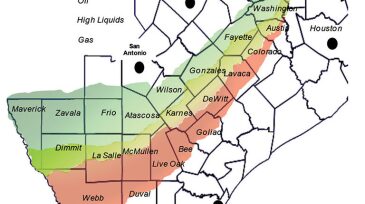
The Eagle Ford shale in Zavala County, Texas, is similar to many high-carbonate-content oil-shale formations.



Page 11 of 11