Drilling

This paper aims to establish a set of best practices for generating particle-size-distribution data from core samples.

This paper discusses the successful execution of two openhole gravel-pack completions in two Gulf of Mexico fields with depleted reservoirs.

This edition highlights three offshore technology papers that address a common industry theme: how targeted engineering solutions can reduce uncertainty, shorten operations, and make technically constrained offshore well activities more executable.
-
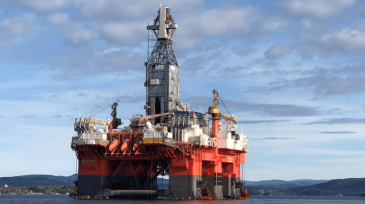
 By using the four converter-battery systems, the operator estimates it will be able to reduce the runtime of the rig’s on-platform diesel engines by 42%, cutting CO2 emissions by 15% and NOx emissions by 12%.
 -
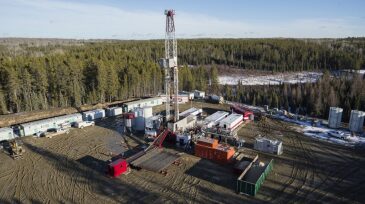
Canadian drilling activity has fallen measurably in 2019, and the outlook is even worse for 2020, according to a forecast from the Petroleum Services Association of Canada.
-
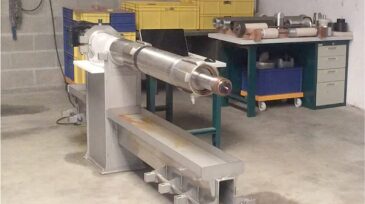
The advent of the rotary-steerable system (RSS) introduced an efficient way to drill both current and future wells. However, current tools still fail to replace positive displacement motors (PDMs).
-
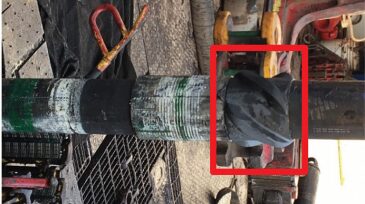
The complete paper documents the development, laboratory- and field testing, and lessons learned from a project to evaluate coated centralizers.
-
Optimizing horizontal well placement is not limited to identifying the most-favorable reservoir, but also involves identifying the ideal target window within that reservoir.
-
Drilling has become a complex operation that requires a multitude of tasks to be managed at the same time. Not surprisingly, then, drilling automation will gain momentum in the near future to deliver consistent execution and performance safely and with good wellbore quality.
-
This paper covers the 7-year history of drilling-fluids application in a reservoir drilling campaign offshore Abu Dhabi, from the early use of a solids-free, brine-/water-based mud to the recent application of nondamaging, nonaqueous fluids (NAFs) with micronized acid-soluble ilmenite.
-
This study focus on the design and evaluation of a customized water-based mud (NP-WBM) using silica oxide nanoparticles (SiO2-NPs) and graphene oxide nanoplatelets (GNPs).
-
Recent research has put extensive focus on the magic of graphene in drilling fluids. Graphene, because of its thermal, electrical, chemical, and mechanical properties, improves mudcake stability and minimizes fluid loss that eventually reduces formation damage.