Drilling

This edition highlights three offshore technology papers that address a common industry theme: how targeted engineering solutions can reduce uncertainty, shorten operations, and make technically constrained offshore well activities more executable.

This paper aims to establish a set of best practices for generating particle-size-distribution data from core samples.

This paper discusses the successful execution of two openhole gravel-pack completions in two Gulf of Mexico fields with depleted reservoirs.
-
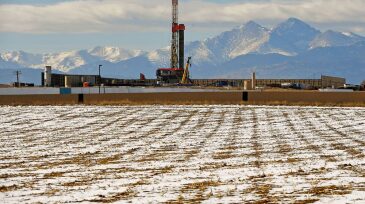
 Months after a pair of deadly explosions in the Colorado oil patch, drilling stocks remain hobbled by the specter of a regulatory clampdown.
 -
The two supermajors and offshore powerhouses are assessing the latest Gulf of Mexico discovery.
-
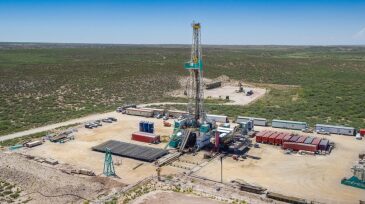
The Irving, Texas-based supermajor plans to cash in on its expanded foothold in the Permian Basin, aided by a big reduction in the US corporate tax rate.
-
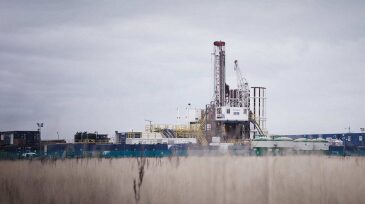
Overcoming numerous regulatory hurdles, Cuadrilla Resources is pressing ahead with its plans to fracture a well in the UK for the first time since 2011.
-
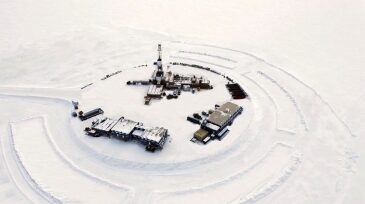
Major oil discoveries by Armstrong Oil & Gas and ConocoPhillips have compelled the US Department of the Interior to reassess its estimate of undiscovered, technically recoverable resources in parts of Alaska.
-
Nonaqueous drilling fluids have been used extensively by the industry, particularly in complex drilling scenarios. They carry some concerns, however, with implications for well integrity.
-
Managed-pressure drilling (MPD) challenges the conventional drilling paradigm, along with drilling-contractor and operator policies and standards. Conventional drilling practices for connections, flow checks, tripping, and well control have been long understood and standardized.
-
In this study, pressure-while-drilling technologies are combined with software simulations to differentiate drilling-fluid thermal expansion, wellbore ballooning, and formation influx during riserless drilling operations.
-
Thermal-well operations come with significant additional complexity in regard to maintaining wellbore integrity and hydraulic isolation from other formations.
-
A fluid technology has been developed to deposit a thin, impermeable barrier over the pores and microfractures of weak, underpressured, and otherwise troublesome formations to maintain wellbore stability and reduce formation damage.