Drilling

As Egypt’s largest oil and gas investor, Eni is ramping up its 2026–2027 drilling campaign with new investments cross the Mediterranean offshore, Nile Delta, Western Desert, and offshore Sinai to strengthen the country’s role as a regional gas and LNG export hub.

The deals, with a potential value exceeding $3.7 billion, are aimed at strengthening Saudi Aramco’s supply chains and expanding its use of industrial artificial intelligence.

Brownfield redevelopment and new exploration projects could lift Venezuelan output above 2 million B/D by next decade.
-
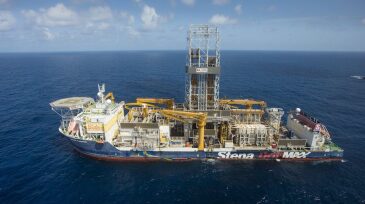
 Already poised to produce more than 500,000 B/D offshore Guyana, ExxonMobil added yet another discovery to its bounty in the emerging regional oil powerhouse, meaning a fourth development phase could be in order.
 -
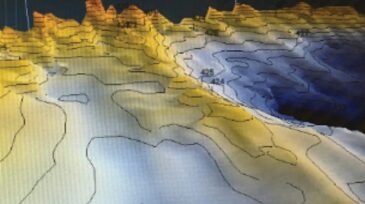
Acquiring data from an abandoned subsea well has been done before, but never quite like this.
-
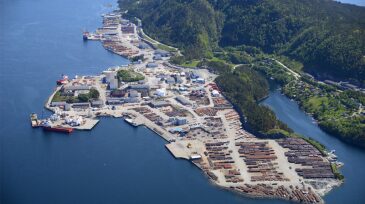
The $10 million/year contract covers the inspection and mobilization of casing and tubing at two Norwegian sites and includes extenstion options in 2020 and 2022.
-
Plug-and-abandonment (P&A) operations can be expensive, leading to negative net present value. Historically, P&A operations in the North Sea—estimated to hold some 3,000 wells of declining production—were performed with either drilling or workover rigs.
-
The complete paper describes a recent directional coiled-tubing drilling (DCTD) job completed for an independent operator in the Appalachian Basin.
-
Shell made its sixth discovery from the Norphlet formation in the deepwater Gulf of Mexico, where the firm’s newly arrived Appomattox platform just 13 miles away presents a tieback opportunity.
-
UK’s active 30th Licensing Round resulted in the award of 123 licenses to a diverse set of 61 companies—an outcome that UK government officials hailed as more proof that interest is picking up in the aging North Sea.
-
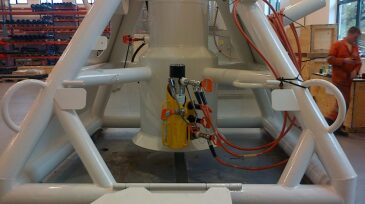
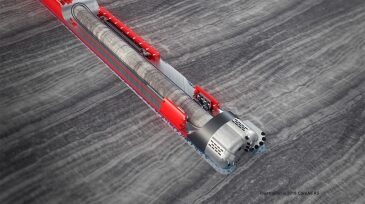
CoreAll's Intelligent Coring System uses a suite of sensors to analyze reservoir cores samples as they are being acquired, and a communication system that sends these data to the rig in real-time.
-
Coring is essential to offshore exploration programs—but sometimes cores are taken from the wrong formation or return to surface in poor condition. One firm thinks it can solve these costly issues with a first-of-a-kind coring device that uses logging instruments that add accuracy and integrity.
-
The Bureau of Safety and Environmental Enforcement is proposing to update regulations covering offshore oil and gas drilling operations.