Drilling

As Egypt’s largest oil and gas investor, Eni is ramping up its 2026–2027 drilling campaign with new investments cross the Mediterranean offshore, Nile Delta, Western Desert, and offshore Sinai to strengthen the country’s role as a regional gas and LNG export hub.

The deals, with a potential value exceeding $3.7 billion, are aimed at strengthening Saudi Aramco’s supply chains and expanding its use of industrial artificial intelligence.

Brownfield redevelopment and new exploration projects could lift Venezuelan output above 2 million B/D by next decade.
-
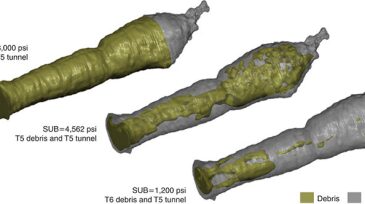
 Because of inherent complexities, understanding the characteristics of perforations in downhole environments is a significant challenge. Perforation-flow laboratories have been used to provide insight into cleanup and productivity mechanisms around perforation tunnels.
 -
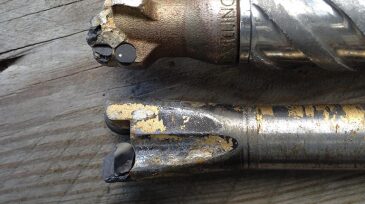
Examples of evolution in well construction during the past several years include new horizontal-well applications, breakthroughs in bit and directional-drilling technology, synthetic fluids, fracture-stimulation advancements, managed-pressure drilling, and the digital revolution.
-
Time spent on bottom drilling is only approximately 10% of the time consumed by drilling operations, but this still provides a significant opportunity for savings if it can be reduced.
-
Falling oil prices are the acid test of drilling efficiency. SPE Technical Director Jeff Moss of ExxonMobil talks about ways to build in lasting savings as part of this special report.
-
The latest example of the offshore sector's march toward automated wellbore construction will take shape later this year in the North Sea.
-
A contest where teams of college students design and build an automated drilling rig able to deal with hazardous obstacles in a test block, showed how a small change can be engineered to matter.
-
This paper describes how a technique known as applied-surface-backpressure managed-pressure drilling (ASBP-MPD) can alleviate the limitations of conventional deepwater well control.
-
Well RXY is located in Cairn’s Ravva offshore field in the Krishna-Godavari Basin in India. One goal for the field was significant crude production by means of a secondary reservoir section.
-
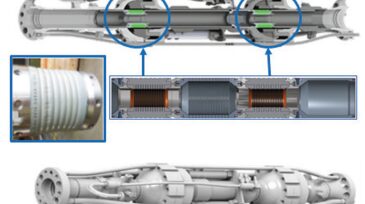
SponsoredNew extreme environment ultracapacitor technology will allow directional drillers to eliminate lithium from their entire supply chain. These advanced ultracapacitors can be coupled with downhole turbine generators to provide reliable downhole power without the need for lithium.
-
Since the 1980s, many technical works have focused on improving the ability to detect hydrocarbons inside the riser and safely remove them from the system. This trend gained extra momentum with the advent of systems such as riser-gas handlers and managed-pressure drilling.