Drilling

As Egypt’s largest oil and gas investor, Eni is ramping up its 2026–2027 drilling campaign with new investments cross the Mediterranean offshore, Nile Delta, Western Desert, and offshore Sinai to strengthen the country’s role as a regional gas and LNG export hub.

The deals, with a potential value exceeding $3.7 billion, are aimed at strengthening Saudi Aramco’s supply chains and expanding its use of industrial artificial intelligence.

Brownfield redevelopment and new exploration projects could lift Venezuelan output above 2 million B/D by next decade.
-
 The development of conventional reservoirs has typically involved minimal logging-while-drilling (LWD) technology, usually consisting of survey, gamma ray, and possibly resistivity tools.
 -
The Burgan reservoir consists of vertically stacked channel sands along with a fault network connected to the aquifer and contains highly viscous reservoir fluid.
-
The paper discusses two gas/condensate-development projects offshore Vietnam that deploy managed-pressure-drilling (MPD) technology.
-
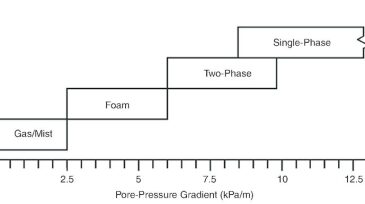
Air drilling has become popular in the Marcellus and Utica shale reservoirs because of its higher rate of penetration (ROP) and less resulting formation damage.
-
This study concerns the mature Gyda reservoir, where some recent production wells have underperformed relative to equivalent initial wells.
-
Production and drawdown data from 10 subsea deepwater fractured wells have been modeled with an analytical model for unsteady-state flow with fines migration.
-
In order to avoid some of the detrimental effects of formation damage, a key aspect is laboratory testing of representative core material under representative downhole conditions.
-
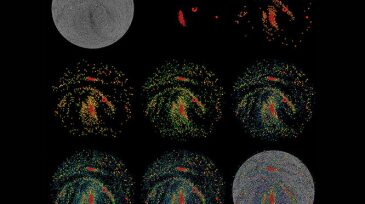
The paper presents a new approach that uses X-ray-microcomputed-tomography (micro-CT) scanning to produce high-resolution data of entire core samples.
-
Approximately one-half of all offshore conventional oil and gas resources are known or thought to be undrillable with conventional, open-to-atmosphere circulating fluids systems for safety, economic, and/or technical reasons.
-
An ongoing research project started nearly 3 years ago by the US Department of Energy’s National Energy Technology Laboratory (NETL) is shedding new light on what really happens to foamed cement as it is pumped deep down offshore wells during completions.