Drilling

This paper aims to establish a set of best practices for generating particle-size-distribution data from core samples.

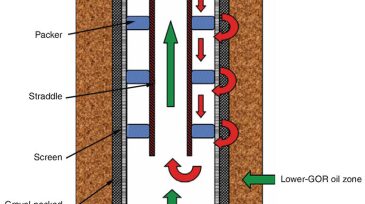
This paper discusses the successful execution of two openhole gravel-pack completions in two Gulf of Mexico fields with depleted reservoirs.

This edition highlights three offshore technology papers that address a common industry theme: how targeted engineering solutions can reduce uncertainty, shorten operations, and make technically constrained offshore well activities more executable.
-
 There is a lot of information buried in drilling reports written every day, but little of it appears in computer databases.
 -
For the past several years, automated drilling has promised to deliver major improvements in drilling performance. But the technology is facing new obstacles that might affect its progress and commercialization.
-
Our industry’s demonstrated ability to innovate and continually improve well-construction technology will be all the more valuable to all plays if low oil prices persist, but especially so for shale and other high-cost-per-barrel plays.
-
This study examines the effects of drilling, completion, and production operations and their associated cyclic stresses on a cement sheath.
-
The combination of ultrasonic pulse-echo and flexural-attenuation measurements was adopted in this project in the South China Sea for cement-integrity evaluation.
-
The first multilateral well in a North Kuwait field has been drilled recently.
-
Complex reservoirs in the Junín block of the Orinoco oil belt of eastern Venezuela offer challenges in achieving higher production rates and maximizing extraheavy-oil recovery.
-
The development of multilateral wells and long-reach wells has become important to maximizing recovery for many oil fields.
-
One approach to refracturing involves the use of mechanical diverters such as perforation balls and rock salts, which may be useful for one stage; however, cessation of pumping operations results in these diverters falling out of the perforations or dissolving.
-
An operator successfully executed two wireline through-tubing gas-shutoff (GSO) workovers in high-angle openhole-gravel-pack (OHGP) completions to isolate high-gas/oil-ratio (HGOR) zones, resulting in significantly increased oil production.