Drilling

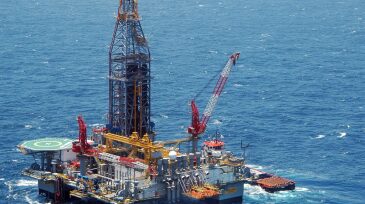
This edition highlights three offshore technology papers that address a common industry theme: how targeted engineering solutions can reduce uncertainty, shorten operations, and make technically constrained offshore well activities more executable.

This paper aims to establish a set of best practices for generating particle-size-distribution data from core samples.

This paper discusses the successful execution of two openhole gravel-pack completions in two Gulf of Mexico fields with depleted reservoirs.
-
 With limited resources and lots of dedication, West Virginia University students wowed judges of the ATCE Drillbotics drilling automation challenge with the automated drilling device they built.
 -
In organic shales, hydraulic fracturing is important for optimizing the production of horizontal wells. For a standalone lateral, the propped surface should be maximized to increase production. In the case of a pad, well spacing is an additional factor.
-
This paper offers an alternative explanation for the early boundary-dominated flow related to dissolution of salt-sealed natural fractures in the shale.
-
A Drilling Advisory System (DAS) is a rig-based drilling-surveillance and -optimization platform that encourages regular drilloff tests, carefully monitors drilling performance, and provides recommendations for controllable drilling parameters to help improve the overall drilling process.
-
An analysis studied whether a well's toe could be affecting the production performance.
-
How do mooring systems reduce risks of hurricane damage to mobile offshore drilling units?
-
As systems automation becomes more widespread in drilling, simulators are required to plan, train rig crews, and monitor real-time operations.
-
Although early inflow control devices and intelligent completions (ICs) were introduced almost 20 years ago, completion technology has not kept pace with advancements in drilling technology.
-
A long-time energy industry executive and chemical engineer has built a new water treatment system that he says can increase recovery rates from shale wells without using chemicals and will recycle all the water used in the process.
-
As the drilling industry improves its efforts to capture drilling operation activities in real time, it has generated a significant amount of data that drilling engineers cannot process on their own.