Drilling

This paper presents a study that confirms glass-reinforced-epoxy-lined tubing as a reliable, cost-effective solution for long-term water-injection service in moderate-salinity offshore environments.
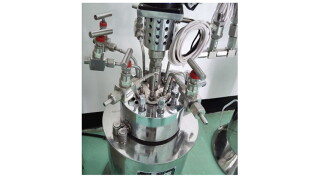
This study aims to systematically assess casing integrity and corrosion risks associated with CO2 injection in oil-recovery operations.

This paper presents findings reinforcing the argument that acid fracturing is a strong alternative stimulation method to improve productivity in the Austin Chalk formation.
-
 One of the defining features of the 21st century will undoubtedly be the changing relationship between humans and automated machines.
 -
A new measurement-while-drilling (MWD) tool has been designed that can operate reliably at 200°C and 207 MPa, providing real-time direction and inclination surveys, azimuthal gamma ray, annular and internal pressure while drilling, and shock and vibration measurements.
-
Looking after the human factors in daily operations is good business because it increases employee safety and improves work performance.
-
This paper describes the planning and execution of use of mud-cap fluid in the drilling of an ultranarrow-margin (0.50-lbm/gal window at the planning stage) high-pressure/high-temperature (HP/HT) well from a jackup rig.
-
The development of conventional reservoirs has typically involved minimal logging-while-drilling (LWD) technology, usually consisting of survey, gamma ray, and possibly resistivity tools.
-
The Burgan reservoir consists of vertically stacked channel sands along with a fault network connected to the aquifer and contains highly viscous reservoir fluid.
-
This study concerns the mature Gyda reservoir, where some recent production wells have underperformed relative to equivalent initial wells.
-
Production and drawdown data from 10 subsea deepwater fractured wells have been modeled with an analytical model for unsteady-state flow with fines migration.
-
In order to avoid some of the detrimental effects of formation damage, a key aspect is laboratory testing of representative core material under representative downhole conditions.
-
The paper presents a new approach that uses X-ray-microcomputed-tomography (micro-CT) scanning to produce high-resolution data of entire core samples.