Drilling

Research by Enervus sees early 2026 permitting activity for the carbon capture and storage wells pointing to a growing approval queue, even while the rate of applications eases.

The new guidelines were released prior to reports that enhanced geothermal developer Fervo Energy experienced a blowout in Utah with no reported injuries.
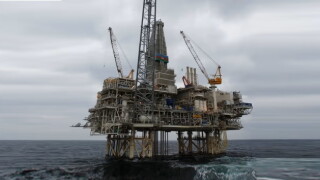
BP said it expects to keep the Azeri-Chirag-Gunashli (ACG) project in production into the 2040s by tapping into separate nonassociated gas reservoirs.
-
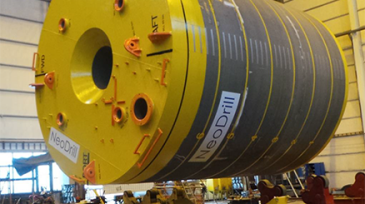
 When the industry discusses subsea wells, the tophole construction gets scant attention. The Norwegian company NeoDrill believes it can create a more structurally stable foundation, greater efficiency, and reduced cost by using a conductor anchor node.
 -
US drilling and completion companies that were slashing workforces and cannibalizing pumping trucks for parts 6 months ago are now hiring crews and repairing equipment to meet rising demand.
-
Drilling automation is one of the most promising emerging technologies that the oil and gas industry has to look forward to. The potential benefits span the spectrum from health and safety to lower costs and repeatable well results.
-
This paper describes the first job in southeast Asia in developing horizontal-well placement in a turbidite environment.
-
The successes and challenges of producers in the United States’ most active oil play received a wide-ranging discussion by three panelists recently at an SPE Gulf Coast Section meeting in Houston on the state of the Permian Basin.
-
Rotary-steerable tools (RSTs) are now deemed mainstays in the drilling community.
-
Drillpipe doesn’t last forever, but a Houston-area startup company says it has developed a way to make it last significantly longer.
-
A new rotary-steerable system (RSS) was designed to give geometrically greater dogleg-severity (DLS) capability while still being able to withstand the increased bending stresses.
-
This paper explores the applications, benefits, and value of a high-build-rate rotary-steerable system (HRSS) capable of delivering dogleg severity (DLS) greater than 18°/100 ft.
-
Drillstring vibration is a leading cause of downhole-tool failure and premature wear of downhole equipment.