Emission management

Growing energy transition investment highlights oil and gas technologies as key enablers.
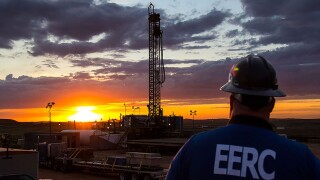
EERC CEO Charles Gorecki outlines how applied research in North Dakota is helping improve oil recovery, reduce emissions, and advance carbon storage.

A newly formed global coalition, Carbon Measures, aims to develop a ledger-based carbon accounting framework and champion market-based solutions to drive emissions reduction.
-
 Six satellites are expected to be launched this year to form a constellation aimed at combating emissions along oil and gas pipelines.
 -
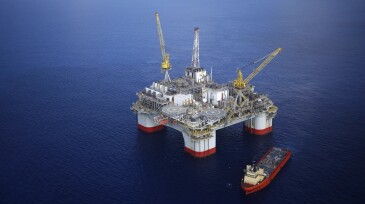
In August 2020, scientists spent 10 days doing airborne surveys of more than 50 platforms in the Gulf of Mexico. Their results revealed a climate impact twice as large as that estimated by government inventories.
-
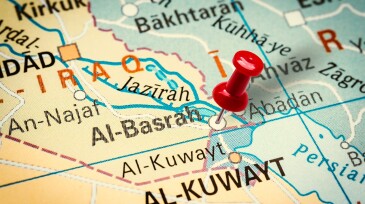
The Gas Growth Integrated Project will capture and supply flare gas to generate electricity and treat seawater to manage pressure in oil wells in Iraq’s Basra region.
-
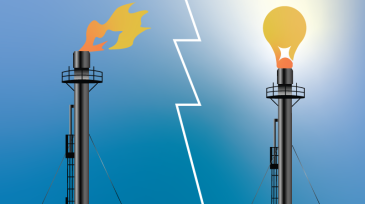
The authors of this paper discuss Saudi Arabia’s progress in gas flaring, the measures the government has taken, and how operators have adapted.
-
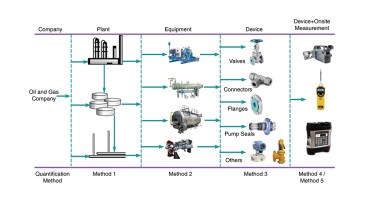
The authors of this paper describe an initiative taken to measure baseline data for methane emission for gas-processing facilities and gas-transmission and regasification units by using accurate tools and methodologies for detection and quantification.
-
SponsoredImprove modeling accuracy and reduce the risk of unplanned downtime. By eliminating the need for multiple applications, get more accurate and comprehensive pressure safety studies faster.
-
The funding aims to support 22 projects to advance technologies to monitor, measure, and mitigate methane emissions across the US natural gas supply chain.
-
Three leading global financial institutions recently announced updated environmentally linked targets aimed at reducing by 2030 their financed emissions in carbon-intensive sectors, including oil and gas.
-
BPX Energy, BP’s US onshore upstream business, has expanded MiQ certification to 100% of BP’s US onshore facilities in Texas and Louisiana.
-
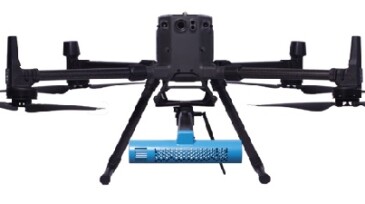
This case study highlights the effectiveness of unmanned aerial systems in enabling land-based operators to assess the relative seriousness of leaks efficiently by both localizing and quantifying their methane emission rates.