Emission management

Winners of Alberta's Drilling Technology Challenge cover a range of technologies from robotics to enhance drilling rig safety to AI-enabled energy management, downhole sensing, well navigation, hybrid power systems, and geothermal energy.

EQT is benchmarking its way to basin-leading productivity and relying on partnerships and new technology to turn KPIs into operational reality.

This article from the SPE Sustainable Development Technical Section (SDTS) explores how the next phase of methane performance will be defined less by pledges and more by measurement, response, and verifiable results.
-
 A recent study of oil and gas methane emissions on the Navajo Nation reveals companies operating on tribal lands pollute 65% more than the national average, wasting millions in tribal resources every year and underscoring the opportunity for tribal leaders to reduce emissions.
 -
Flaring and emissions challenges have recently made news headlines around the world. The goal of this article is to engage you with this important topic by presenting a selection of recent SPE papers which address these challenges through various approaches.
-
Although the Environmental Defense Fund and ExxonMobil are not always aligned on certain important issues, the organizations are working together to understand and reduce methane emissions.
-
Volatile organic compounds (VOCs) present in crude oil can be released to the atmosphere from storage tanks, waste waters, and equipment leaks. A pilot-scale sequential biotrickling/biofiltration unit was designed and tested for removal of VOCs from a wastewater sump.
-
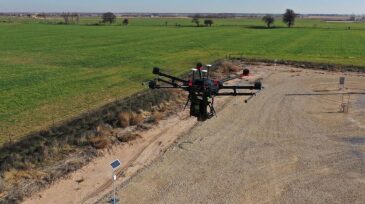
Drones will be just one of the tools that the service company uses in its drive toward net-zero carbon emissions.
-
Companies are bringing satellite monitoring to the unconventional oilfield—namely the Permian Basin—where they are training machine learning models to track and predict drilling and completions work.
-
The proposal would rollback requirements for testing and fixing fugitive methane leaks in oil and gas operations. It would save millions in regulatory costs, but the estimated increase in methane emissions is controversial.
-
Methane monitoring using improved methods is detecting more gas in the atmosphere, increasing the need for better ways to eliminate releases.
-
With the API and a multi-operator group passing separate programs aimed at reducing methane emissions, the discussions on what defines an acceptable level of regulation continues within the industry.
-
A task force from The Academy of Medicine, Engineering, and Science of Texas has released a comprehensive analysis of the effects the North American shale boom has had on the environment and communities in Texas.