Emission management

This paper presents a flexible, highly cost- and energy-efficient method of gas separation and CO₂ capture from many different gas mixtures with a large range of CO₂ concentrations.

Emissions management covers a wide array of topics such as carbon capture, use, and storage; emissions monitoring; flare management; methods to improve operational efficiency; carbon accounting; and the effect of emissions management on global and local economics. The papers published in the past year span all these subcategories.

This study explores the carbon-capture and mineralization potential of ultramafic rock powders when exposed to flue gases generated from combustion of crude oil and mesquite-derived charcoal.
-
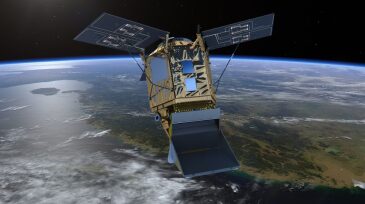
 A wave of satellites set to orbit the Earth will be able to pinpoint producers of greenhouse gases, right down to an individual leak at an oil rig.
 -
A new report from the Environmental Defense Fund and the Environmental Council of the States Shale Caucus recommends a new framework for approving technologies and methodologies.
-
The new satellite will build on the success of the company's demonstration satellite Claire, which has performed over 2,500 observations of oil and gas facilities as well as other natural and industrial sources of carbon dioxide and methane.
-
The oil and gas major has set aside $100 million to fund projects that will deliver new greenhouse gas emissions reductions in its upstream oil and gas operations.
-
A recent study of oil and gas methane emissions on the Navajo Nation reveals companies operating on tribal lands pollute 65% more than the national average, wasting millions in tribal resources every year and underscoring the opportunity for tribal leaders to reduce emissions.
-
Flaring and emissions challenges have recently made news headlines around the world. The goal of this article is to engage you with this important topic by presenting a selection of recent SPE papers which address these challenges through various approaches.
-
Although the Environmental Defense Fund and ExxonMobil are not always aligned on certain important issues, the organizations are working together to understand and reduce methane emissions.
-
Volatile organic compounds (VOCs) present in crude oil can be released to the atmosphere from storage tanks, waste waters, and equipment leaks. A pilot-scale sequential biotrickling/biofiltration unit was designed and tested for removal of VOCs from a wastewater sump.
-
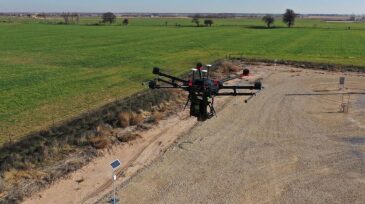
Drones will be just one of the tools that the service company uses in its drive toward net-zero carbon emissions.
-
Companies are bringing satellite monitoring to the unconventional oilfield—namely the Permian Basin—where they are training machine learning models to track and predict drilling and completions work.