Energy transition

This paper presents a flexible, highly cost- and energy-efficient method of gas separation and CO₂ capture from many different gas mixtures with a large range of CO₂ concentrations.

This paper introduces channel stacking, a novel and efficient methodology designed to significantly improve optical gas imaging-based leak detection.

This study explores the carbon-capture and mineralization potential of ultramafic rock powders when exposed to flue gases generated from combustion of crude oil and mesquite-derived charcoal.
-
 The US federal government is working to stymie offshore wind power, but proponents aren’t going quietly. Armed with data, they are taking on a sea of misinformation and hostility to defend the burgeoning resource in the US, while the rest of the world moves ahead briskly.
 -
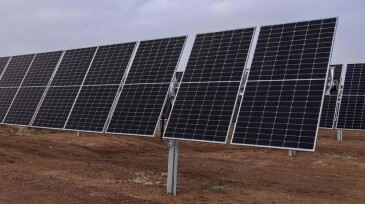
The Pinnington project in North Texas is the company’s largest solar project in the state and brings Repsol’s renewable energy generation capacity in the US to greater than 2 GW.
-
The new guidelines were released prior to reports that enhanced geothermal developer Fervo Energy experienced a blowout in Utah with no reported injuries.
-
Utah, Colorado, Arizona, and New Mexico have formed the Mountain West Geothermal Consortium to turn geothermal energy into gigawatts of baseload power.
-
This paper presents a case study of oriented tubing-conveyed perforation followed by an acidizing operation to overcome technical challenges posed by a depleted reservoir targeted for a carbon capture, utilization, and storage project.
-
The collaboration aims to provide a dedicated land rig for geothermal wells in the US.
-
The Houston-based enhanced geothermal developer scored $1.9 billion in an initial public offering, positioning it to expand projects in Utah and Nevada.
-
AI‑driven data center growth is straining US power grids and accelerating interest in enhanced geothermal systems as a scalable, low‑carbon solution.
-
Three wind projects planned to produce around 300 MW have entered the execution phase under a partnership with OMV Petrom and RNV Infrastructure.
-
The US Department of Energy and Pennsylvania Department of Environmental Protection will convert a horizontal Utica Shale gas well into an enhanced geothermal system. Building directly on horizontal drilling and completion practices developed in the Utica, the project will include evaluation of optimal well orientation, lateral placement, and spacing.