Energy transition

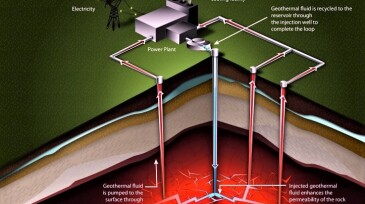
The new guidelines were released prior to reports that enhanced geothermal developer Fervo Energy experienced a blowout in Utah with no reported injuries.

Utah, Colorado, Arizona, and New Mexico have formed the Mountain West Geothermal Consortium to turn geothermal energy into gigawatts of baseload power.

This paper presents a case study of oriented tubing-conveyed perforation followed by an acidizing operation to overcome technical challenges posed by a depleted reservoir targeted for a carbon capture, utilization, and storage project.
-
 Wood Mackenzie said "advantaged barrels" that are cheap to extract and with low emissions represent less than a third of untapped resources.
 -
New funding aims to launch up to seven pilots to help expand the deployment of enhanced geothermal systems.
-
The funding is for 33 research and development projects which will tackle the technical challenges of capturing CO2.
-
The use of artificial intelligence in the clean energy sector increases the availability and accessibility of clean energy, making it a more viable and cost-effective alternative to traditional energy sources.
-
When it comes to workers’ salaries in oil and gas vs. clean energy, how does their compensation compare? The answer depends on the roles of workers and their locations, qualifications, experience, training—and personal decisions.
-
At the center of a rush to build carbon storage is the state of Louisiana, where the number of applications to build long-term storage is equal to half the sites operating globally.
-
Fossil fuel importers could move more quickly to renewables as a domestic alternative to buffer the impact of energy supply disruptions and rising prices.
-
A new 1.0 Bcf/D facility in Baytown, Texas, is expected online no later than 2028.
-
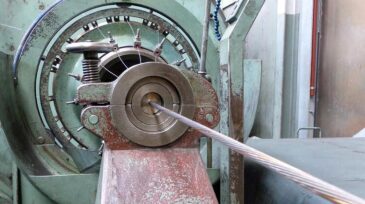
An EU project is bringing together 15 partners from seven countries to work on designing and manufacturing superconducting cables to enable more efficient and less costly power transmission from renewable electricity generation sites.
-
Spending on low-carbon projects will increase by $60 billion this year, 10% higher than 2022, led by wind developments but helped by a significant rise in funding for hydrogen and carbon capture, utilization and storage infrastructure, Rystad Energy research shows.