Energy transition

The Houston-based energy company's first generating unit has begun producing electricity as it works toward a buildout that could eventually power nearly 1 million US homes.

With funding opportunities improving, developers and researchers are focused on shortening project learning cycles and reducing uncertainty to attract more capital and speed deployment.

The US Department of Energy has awarded more than $99 million to 21 projects that will advance geothermal development through field-scale testing of next-generation technologies and exploration drilling programs across the US.
-
 2025 has seen an 81% year-on-year rise in the number of small modular reactor designs to have secured at least one source of funding or a funding commitment.
 -
The global oilfield service company is working with Ormat Technologies to boost its integrated geothermal business.
-
A resilience-based approach to safety was the focus of a panel of experts at the 2025 SPE Annual Technical Conference and Exhibition in Houston.
-
Industry leaders speaking during the opening plenary session at SPE’s Annual Technical Conference and Exhibition say they are optimistic yet pragmatic about delivering energy amid the energy transition.
-
APOGCE 2025 set the stage for strategic dialogues on how Asia Pacific’s upstream industry can innovate, invest, and collaborate to meet growing energy demand while advancing net-zero goals.
-
DNV projects the energy transition will be marginally slower than what it forecast last year, both in terms of emissions and in fossil fuel’s share of primary energy.
-
The freely accessible online platform is the latest in a series of maps designed to reveal the continent’s untapped geothermal potential.
-
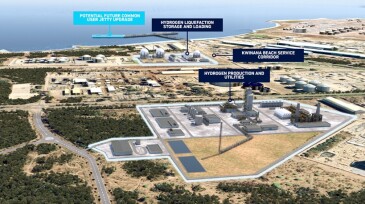
Australia’s H2Perth blue and green hybrid hydrogen project is expected to benefit from carbon credits from the offshore Bonaparte carbon storage facility where Inpex and TotalEnergies are drilling appraisal wells together with Woodside.
-
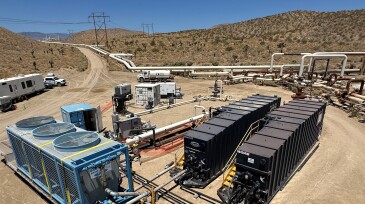
The company announced that its geothermal system operated for more than 3,000 hours, which it said validates the technology’s commercial potential.
-
This study recommends favoring the combustion of ammonia over hydrogen for the purpose of reducing CO₂ and nitrogen emissions.