Enhanced recovery
Coreflood experiments reveal that alkali significantly reduces viscosity loss in polyacrylamide flooding systems by minimizing adsorption and improving polymer stability under shear stress. The findings position viscosity retention as a key screening criterion for successful alkali-polymer enhanced-oil-recovery applications.

This study investigates the potential for in-situ hydrogen generation from hydrocarbons using in-situ combustion, with particular emphasis on the role of kerogen content and heating mode.

This paper presents the application of degradable particulate-diverter technology to improve oil production by effectively diverting stimulation treatment fluids away from high-water-cut, high-permeability, high-temperature producing intervals or zones.
-
 This paper outlines the importance of numerical rate transient analysis for dry gas wells, describing a simple, fully penetrating planar fracture model.
-
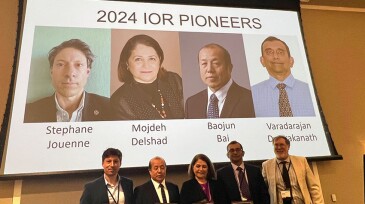
The honor recognizes recipients for their lasting and significant contributions in the field of IOR.
-
This paper highlights an approach of using active hydrogen to stimulate hard-to-recover formations from candidate-well selection through pilot execution and evaluation.
-
The authors investigate the utility of applying unconventional technology to low- or variably producing carbonate reservoirs to increase estimated ultimate recovery and decrease development-scale variability.
-
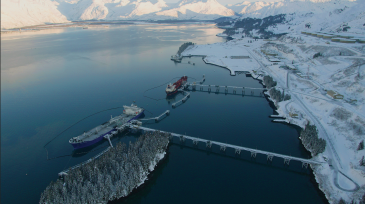
By acquiring Eni’s two producing shallow-water assets, Hilcorp will become the largest offshore oil producer on Alaska’s North Slope.
-
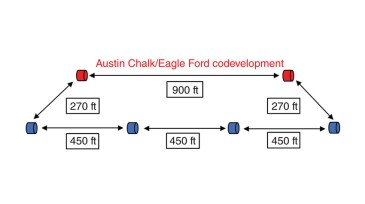
Pilots and papers are plentiful, but the shale sector has no big enhanced oil recovery projects to speak of. It may just have to stay that way for a while.
-
This study proposes a hybrid model that combines the capacitance/resistance model, a machine-learning model, and an oil model to assess and optimize water-alternating-gas (WAG) injectors in a carbonate field.
-
This paper describes a hydraulic fracturing pilot project using a technique that generates higher fracture conductivity to reduce the drawdown during production and improve connection through laminations.
-
This paper presents a case study of a North African oil field producing from two Ordovician sands with differing permeabilities where significant benefit was achieved by fracture stimulating one or both intervals in two wells.
-
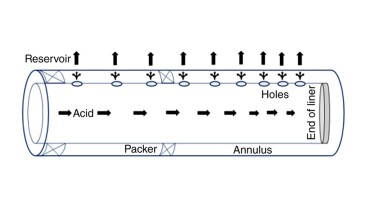
This paper describes the stimulation of a horizontal water-injection well with a limited-entry-liner completion in an onshore carbonate reservoir using a large volume of viscoelastic diverter-acid fluid system ahead of the main acid stage.