Enhanced recovery

Coreflood experiments reveal that alkali significantly reduces viscosity loss in polyacrylamide flooding systems by minimizing adsorption and improving polymer stability under shear stress. The findings position viscosity retention as a key screening criterion for successful alkali-polymer enhanced-oil-recovery applications.

This study investigates the potential for in-situ hydrogen generation from hydrocarbons using in-situ combustion, with particular emphasis on the role of kerogen content and heating mode.

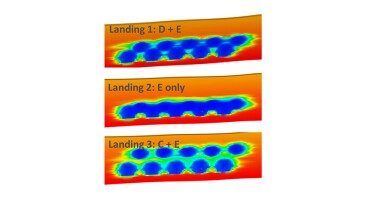
This paper presents the application of degradable particulate-diverter technology to improve oil production by effectively diverting stimulation treatment fluids away from high-water-cut, high-permeability, high-temperature producing intervals or zones.
-
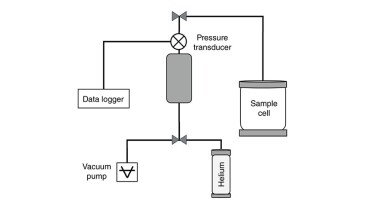
 This paper introduces new methods to perform reliable permeability and saturation-dependent relative permeability measurements in organic-rich mudrock core samples using a pressure-decay setup.
-
This paper investigates condensate-banking effects on well performance by conducting field-modeling studies on Delaware Basin deep Wolfcamp condensate producers using compositional simulation models with hydraulic fractures.
-
Secondary and tertiary efforts are critical for sustaining the productive lives of unconventional plays.
-
The authors of this paper describe a method of stimulating a multizone hydrocarbon-producing well wherein a tool is deployed downhole by wireline to generate acid vapor at a target depth, allowing each interval to be treated uniquely.
-
This paper extends an integrated two-scale continuum model that contemplates mass, momentum, and energy changes to study the acid-stimulation process in complex carbonate acid-stimulation systems with the development of fracture and vug networks.
-
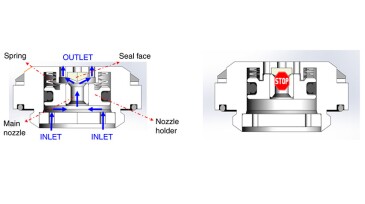
The authors of this paper write that autonomous outflow-control devices can positively affect matrix acidizing by providing the best possible conformance.
-
This paper discusses the effect of injected-polymer viscosity on various aspects of a project, from recovery to surface facilities, including both theoretical arguments and practical field experience—which do not always align.
-
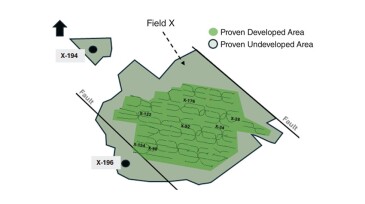
This study leverages oil-fingerprinting technology and geochemical data to evaluate the fluid connectivity between a main field and its stepout wells.
-
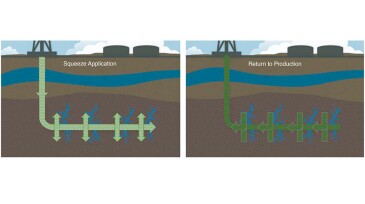
This paper provides details of a pilot study conducted on multiple wells, showcasing the potential of a novel biotechnology in Bakken enhanced oil recovery.
-
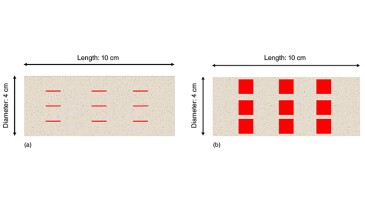
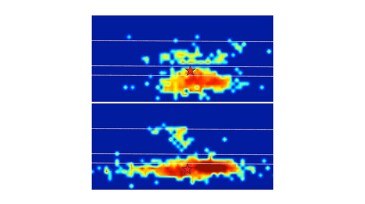
In this work, microseismic observations are integrated with strain and other observations to investigate the microseismic response in relation to the underlying hydraulic fracture geometry for different rock types.