Enhanced recovery

SPE Journal is seeking submissions for a special issue on sustainable enhanced oil recovery (EOR), highlighting innovations that boost oil recovery while reducing CO2 emissions and environmental impact. The Call for Papers opens on 15 October 2026.

By integrating experimental and mathematical modeling approaches, this work aims to advance the understanding of sand-detachment dynamics and formation instability under varying saturation conditions.

As Egypt’s largest oil and gas investor, Eni is ramping up its 2026–2027 drilling campaign with new investments cross the Mediterranean offshore, Nile Delta, Western Desert, and offshore Sinai to strengthen the country’s role as a regional gas and LNG export hub.
-
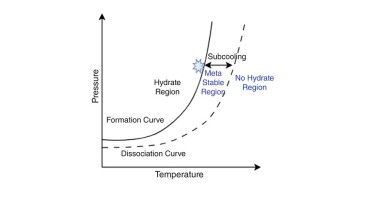
 This study investigates hydrate formation in a water-alternating-gas injection well under water-to-gas and gas-to-water changeover operations.
 -
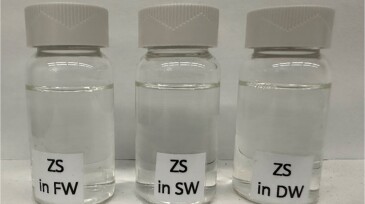
This study explores the potential of locally produced surfactants for enhanced oil recovery in high-temperature and high-salinity reservoir environments.
-
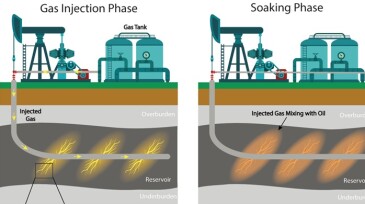
This paper presents a comprehensive literature review and critical examination of the published modeling and experimental studies regarding the recovery mechanisms of cyclic gas injection and the conditions under which the process can enhance oil recovery with the aim to identify lessons learned and areas in need of further study.
-
Shale Ingenuity’s first pilot used common natural gas liquids to boost daily output 30-fold from a low-producing horizontal well in Texas.
-
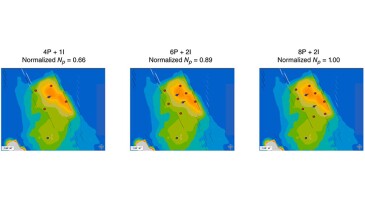
This paper presents a multidisciplinary view of the evolution of a development project for the central area of Sururu and the method applied to address challenges and propose solutions.
-
This paper presents a clear and consistent method for determining dead and live crude EACNs using a single reliable method, highlighting a graphical way to determine the optimal salinity and its uncertainties using real data.
-
This paper presents a unique investigation into determining the sufficient concentration of hardness ions required to significantly reduce the adsorption of acrylamide-tertiary-butyl-sulfonate-based polymer with a focus on mitigating polymer retention in carbonate formations using softened brine.
-
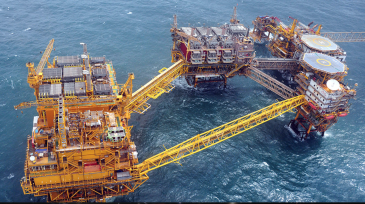
India’s state oil company is accepting proposals from potential technical service partners until 15 September for EOR projects in the Arabian Sea.
-
The SPE IOR-EOR Terminology Review Committee has opened a period for public comments on a draft technical report.
-
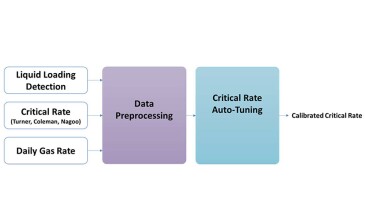
This paper describes a data-driven approach for liquid-loading detection and prediction that harnesses high-frequency gas-rate and tubinghead-pressure measurements to identify the onset of liquid loading and correct critical rates computed by empirical methods.