Enhanced recovery

SPE Journal is seeking submissions for a special issue on sustainable enhanced oil recovery (EOR), highlighting innovations that boost oil recovery while reducing CO2 emissions and environmental impact. The Call for Papers opens on 15 October 2026.

By integrating experimental and mathematical modeling approaches, this work aims to advance the understanding of sand-detachment dynamics and formation instability under varying saturation conditions.

As Egypt’s largest oil and gas investor, Eni is ramping up its 2026–2027 drilling campaign with new investments cross the Mediterranean offshore, Nile Delta, Western Desert, and offshore Sinai to strengthen the country’s role as a regional gas and LNG export hub.
-
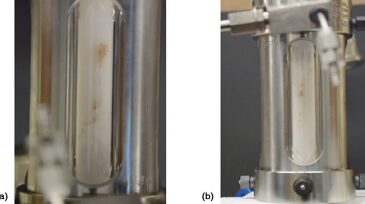
 High-concentration polymer flooding can improve oil-displacement efficiency but separation of oil/water mixture becomes more difficult because of emulsification. In this work, a case history of dehydration technology for HCPF production and lab investigation of emulsion behaviors are reviewed.
 -
Saudi Aramco saw a jump in production for a type of EOR that often takes years to see full benefits.
-
Partitioning interwell tracer tests (PITTs) have been used to estimate remaining oil saturations (ROSs) during waterflooding.
-
For nearly a decade, Saudi Aramco has been studying how altering the chemical makeup of seawater injected into its reservoirs can increase production. The result is "smart water" that can boost the sweep effectiveness of a waterflood.
-
With the easy conventional oil in Argentina having been produced, one remaining way to find new oil in existing fields is to convert fields from primary or secondary production to secondary or tertiary production, respectively.
-
In this study, detailed petrophysical and geological field models focusing on the middle and lower members of the Bakken Formation were developed.
-
Carbon dioxide (CO2)/water foams are of interest for mobility control in CO2 enhanced oil recovery (EOR) and as energized fracture fluids or as hybrid processes that combine aspects of both processes.
-
There remain a number of challenges with CO2 EOR. These include gravity override, poor sweep efficiency, and economic factors.
-
This paper describes a gas-injection pilot that has been implemented in offshore Middle East carbonate reservoirs to assess injectivity, productivity, macroscopic-sweep efficiency, flow assurance, and operational efficiency in a field that has a long water-injection history.
-
The operator has initiated a cyclic-steam-stimulation project in the Opal A diatomite of the Sisquoc formation on the Careaga lease in the Orcutt oil field in Santa Barbara County, California. This paper discusses steam-injection step-rate tests (SRTs) for this asset as part of its expansion.