Enhanced recovery

SPE Journal is seeking submissions for a special issue on sustainable enhanced oil recovery (EOR), highlighting innovations that boost oil recovery while reducing CO2 emissions and environmental impact. The Call for Papers opens on 15 October 2026.

By integrating experimental and mathematical modeling approaches, this work aims to advance the understanding of sand-detachment dynamics and formation instability under varying saturation conditions.

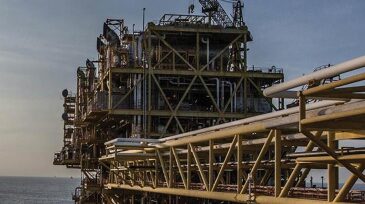
As Egypt’s largest oil and gas investor, Eni is ramping up its 2026–2027 drilling campaign with new investments cross the Mediterranean offshore, Nile Delta, Western Desert, and offshore Sinai to strengthen the country’s role as a regional gas and LNG export hub.
-
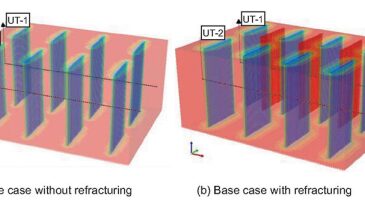
 The Bakken Petroleum System, which includes the Bakken and Three Forks shales in North America, is estimated to hold as much as 900 billion bbl of original oil in place.
 -
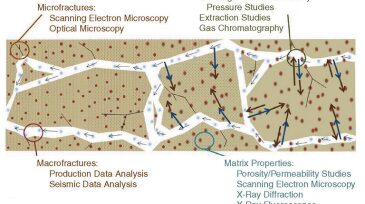
The label unconventional oil and gas stubbornly hangs on because these formations cannot be understood using the rules of conventional petroleum engineering.
-
The authors discuss the results of a pilot project to capture post-combustion CO2 for purposes of EOR.
-
Produced water from chemical floods can cause problems for separation and water treatment equipment due to the polymers and surfactants used. Challenges are greater offshore where space limitations can affect treatment options.
-
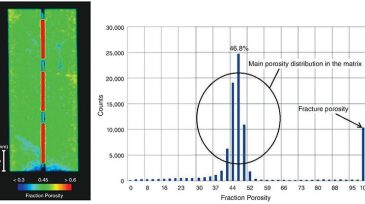
This work demonstrates that molecular diffusion may be a viable oil-recovery mechanism in fractured reservoirs during injection of carbon dioxide (CO2) for enhanced oil recovery (EOR).
-
In this paper, two different EGR methods are investigated and systematically compared in terms of efficiency.
-
In this study, the authors use measured CO2/brine relative permeability data available in the literature to study the behavior of the data obtained for various rocks.
-
This paper introduces a new carbon dioxide (CO2) -hybrid fracturing-fluid design that intends to improve production from ultratight reservoirs and reduces freshwater usage.
-
The combination of technology advances and world politics results in oil supply-and-demand cycles that have occurred repeatedly over the past 100 years and that have affected and will continue to affect our careers.
-
A normal five-spot polymer-flooding pilot has been conducted at the Mangala field, one of the largest onshore fields in India, and results are encouraging