Environment

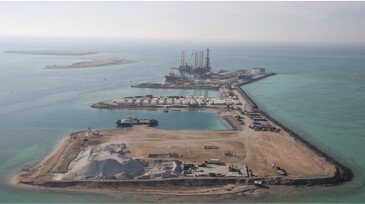
The Absheron gas field expansion will supply additional natural gas to Azerbaijan’s domestic market and support its export commitments to Turkey, allowing Baku to stay focused on meeting its gas export obligations to Europe.

With millions of wells having been drilled in the US since the beginning of the oil age, the land is pocked with old, unused wellbores. For most, repurposing is a pipe dream. Plugging is the best option.

This guest editorial examines how the most commonly used and cited methane emissions metric can create a misleading picture of upstream gas-handling performance for both the public and industry professionals.
-
 Higher bonding amounts and an expanded orphaned well program will fund the cleanup of thousands of aging sites.
 -
This marks the first time the Federal Energy Regulatory Commission (FERC) has formally incorporated environmental justice considerations into one of its policies, making environmental justice a matter to be considered systematically in FERC proceedings for certificates of public convenience and necessity.
-
From 2013 to 2018, the number of terrestrial and marine spills reported in Trinidad and Tobago trended upward. The country’s Ministry of Energy and Energy Industries assessed its National Oil Spill Contingency Plan (NOSCP) with the Readiness Evaluation Tool for Oil Spills and identified gaps in national legislation, risk management, logistics, training and exercises, …
-
A new generation of detectors will be many times better at tracking discharges of the dangerous greenhouse gas.
-
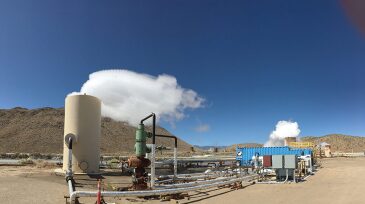
The two companies will work to retrofit nonproducing wells for geothermal production and scale GreenFire Energy’s closed-loop advanced geothermal systems.
-
The paper presents the challenges faced and overcome while drilling and testing a high-pressure/high-temperature sour-gas well offshore in an environmentally sensitive environment.
-
The two companies will explore carbon capture solutions of various sizes over an initial 9-month evaluation period.
-
Despite global supply chain challenges and component shortages resulting in elevated system costs in 2021, PV installations remained resilient.
-
The agency’s new Global Methane Tracker analysis reports that methane emissions from the energy sector are 70% higher than official figures.
-
The companies will leverage each other’s experience and assets to offer full-cycle water-handling services in West Texas.