Environment
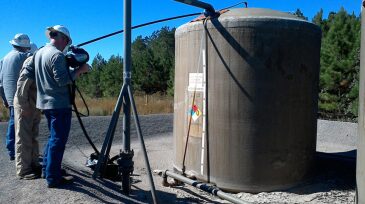
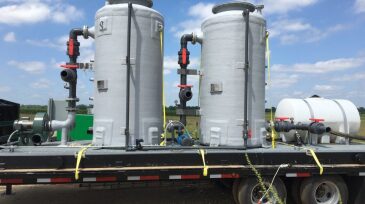
A laboratory research study evaluates several different chemical injection concepts for the removal of elemental mercury from multiphase flow.

Experts and industry leaders gathered in The Woodlands, Texas, recently to sift through the challenges of carbon capture, utilization, and storage. The puzzle is coming together, but some critical pieces are still needed before the results look like the picture on the box.

This article from the SPE Sustainable Development Technical Section (SDTS) explores how the next phase of methane performance will be defined less by pledges and more by measurement, response, and verifiable results.
-
 Elevated concentrations of strontium, an element associated with oil and gas waste waters, have accumulated in the shells of freshwater mussels downstream from wastewater disposal sites, according to researchers from Penn State and Union College.
 -
A new study offers answers to questions that have puzzled policymakers, researchers,and regulatory agencies for decades: How much methane is being emitted from natural gas operations across the US? And why have different estimation methods seemed to disagree?
-
Some of these technologies can be deployed now, but additional ones are needed to meet climate goals.
-
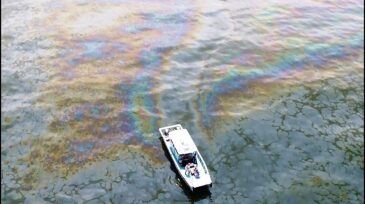
Engineers from the Monterey Bay Aquarium Research Institute have demonstrated a new use for the institute's long-range autonomous underwater vehicles—detecting and tracking oil spills.
-
Biological-based emissions control has promising advantages such as the potential for a low carbon footprint, low secondary pollutants such as NOx and SOx, lower energy demands, and lower cost.
-
An oil spill that has been quietly leaking millions of barrels into the Gulf of Mexico has gone unplugged for so long that it now verges on becoming one of the worst offshore disasters in US history.
-
Proposed changes would modify EPA's August 2016 final rule, "Oil and Natural Gas Sector: Emission Standards for New, Reconstructed, and Modified Sources." The proposal has been submitted for publication to the Federal Register. Following that publication, the EPA will accept comments for 60 days.
-
The 1972 Clean Water Act has driven significant improvements in US water quality, according to the first comprehensive study of water pollution over the past several decades by researchers at UC Berkeley and Iowa State University.
-
Bob Dudley, the chief executive of BP, took charge of the London-based company when it was struggling to survive after the 2010 explosion of the Deepwater Horizon oil rig in the Gulf of Mexico. Dudley recently talked about the oil industry, climate change pressures, and technology.
-
Stanford researchers have mapped local susceptibility to man-made earthquakes in Oklahoma and Kansas. The new model incorporates physical properties of the Earth’s subsurface and forecasts a decline in potentially damaging shaking through 2020.