Environment

The Absheron gas field expansion will supply additional natural gas to Azerbaijan’s domestic market and support its export commitments to Turkey, allowing Baku to stay focused on meeting its gas export obligations to Europe.

With millions of wells having been drilled in the US since the beginning of the oil age, the land is pocked with old, unused wellbores. For most, repurposing is a pipe dream. Plugging is the best option.

This guest editorial examines how the most commonly used and cited methane emissions metric can create a misleading picture of upstream gas-handling performance for both the public and industry professionals.
-
 The company said its goals underscore its strong environmental, social, and governance performance as it responds to rising global energy demand. In addition, it said, the goals are aligned with the United Nation’s Sustainable Development Goals.
 -
The international Ocean Renewable Energy Action Coalition, spearheaded by Ørsted and Equinor, has been formed to advance sustainable deployment of ocean-based renewable energy and mitigate the harmful effects of climate change.
-
As the pressure to act on climate change builds, the industry should consider a range of options.
-
The company has launched new climate ambitions to reduce the absolute greenhouse gas emissions from its operated offshore fields and onshore plants in Norway by 40% by 2030, 70% by 2040, and to near zero by 2050.
-
Equinor has released its plan for eliminating carbon dioxide emissions in Norway by 2050, but it comes with some tall technical challenges.
-
Meeting the challenge of climate change requires worldwide action from all sectors of society. Throughout this transition, oil and gas will have a role to play within the mix of energy sources to meet the need for affordable and clean energy products and services.
-
As a result of its investigation into the incident and its findings, the bureau recommends that operators increase scrutiny in the design, placement, and maintenance of their subsea infrastructure.
-
Seven members of the International Association of Oil and Gas Producers—Chevron, Eni, Equinor, ExxonMobil, Hess, Shell, and Total—have launched a new joint industry project on Environmental Genomics.
-
Alberta carbon conversion challenge yields potential GHG reduction of millions of metric tons per year.
-
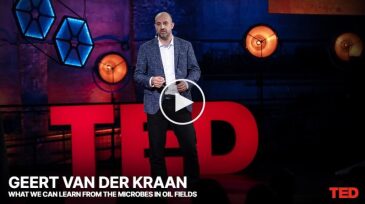
DuPont Microbial Control research scientist and “microbial detective” Geert van der Kraan shares the clues that microbial life leaves behind to help make the extraction process cleaner in a recent TED Talk.