Environment

A laboratory research study evaluates several different chemical injection concepts for the removal of elemental mercury from multiphase flow.

Experts and industry leaders gathered in The Woodlands, Texas, recently to sift through the challenges of carbon capture, utilization, and storage. The puzzle is coming together, but some critical pieces are still needed before the results look like the picture on the box.

This article from the SPE Sustainable Development Technical Section (SDTS) explores how the next phase of methane performance will be defined less by pledges and more by measurement, response, and verifiable results.
-
The Pipeline and Hazardous Materials Safety Administration (PHMSA) is cracking down on smaller violations in the crude oil, petroleum, and hazardous liquid industries to combat a slow rise in the number of pipeline accidents.
-
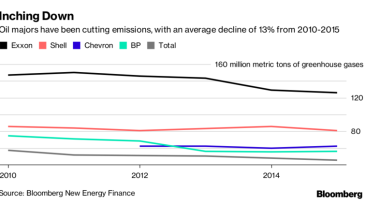
 It’s no secret that oil majors are among the biggest corporate emitters of pollution. What may be surprising is that they’re reducing their greenhouse-gas footprints every year, actively participating in a trend that’s swept up most corporate behemoths.
 -
Getting rid of wastewater from onshore wells has become an increasingly costly problem for oil producers as US crude output surged in recent years, especially in the new shale fields from Texas to North Dakota.
-
San Antonio-based Petro Waste Environmental (PWE) announced the opening of its newest state-of-the-art nonhazardous oil and gas waste landfill facility in Howard County, Texas.
-
As companies begin examining facilities in the wake of Hurricane Harvey, commercial drones have become a valuable asset in reaching flooded areas too dangerous for people to reach.
-
Southwest Research Institute is working to improve the accuracy of pipeline leak detection using sensors, artificial intelligence, and deep learning.
-
Natural source zone depletion (NSZD) is the new technical term for naturally occurring biodegradation processes that reduce petroleum, nonaqueous-phase liquids (NAPL) from the subsurface.
-
Colorado Gov. John Hickenlooper has announced a 7-part plan to improve safety, with plugging of orphan wells at the top of the list.
-
An appeals court on 22 August rejected the federal government’s approval of a natural gas pipeline project in the southeastern US, citing concerns about its effect on climate change.
-
The appeals court ruled that, while regrettable, the fact that the spill occurred does not mean that ExxonMobil violated pipeline integrity regulations for risk assessment.