Environment

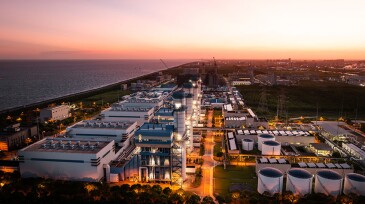
TotalEnergies signed off for 30% operated stakes in the Lang Lebah and B14 gas fields offshore Sarawak on the sidelines of ADIPEC in Abu Dhabi, while also highlighting methane-reduction partnerships in Angola, India, and Southeast Asia.

DNV notes that energy and industrial process-related carbon emissions will have dropped by 2050 by only 44% from today’s level, not even halfway to the net-zero pledge envisioned by the Paris climate agreement.

The Absheron gas field expansion will supply additional natural gas to Azerbaijan’s domestic market and support its export commitments to Turkey, allowing Baku to stay focused on meeting its gas export obligations to Europe.
-
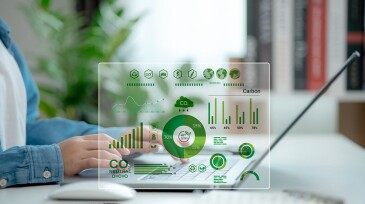
 A newly formed global coalition, Carbon Measures, aims to develop a ledger-based carbon accounting framework and champion market-based solutions to drive emissions reduction.
-
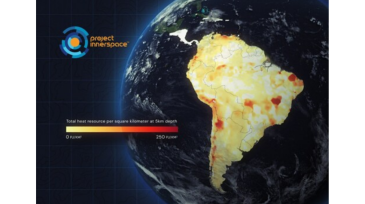
The freely accessible online platform is the latest in a series of maps designed to reveal the continent’s untapped geothermal potential.
-
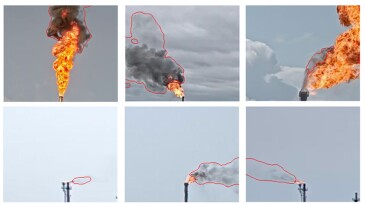
This paper focuses on developing a model that can be used in an automated, end-to-end flare-smoke detection, alert, and distribution-control solution that leverages existing flare closed-circuit television cameras at manufacturing facilities.
-
This study recommends favoring the combustion of ammonia over hydrogen for the purpose of reducing CO₂ and nitrogen emissions.
-
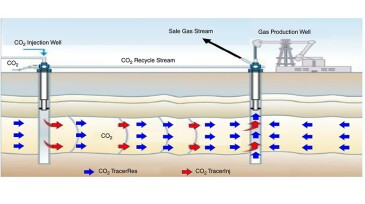
This study explores the feasibility of implementing in-situ carbon dioxide recycling for sequestration as a fit-for-purpose developmental strategy for a Malaysian gas field characterized by an initial carbon-dioxide content of approximately 60%.
-
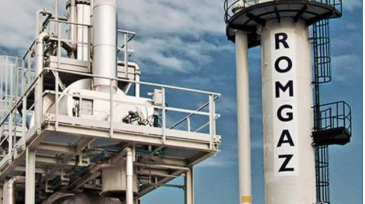
Real-time wellhead monitoring aims to help Romania meet new EU methane emission regulations.
-
Iraq’s Gas Growth Integrated Project aims to increase electricity generation by capturing flare gas collected from three southern oil fields. A desalination project will use treated seawater to maintain well pressures.
-
The agency’s administrator said the program “does nothing to improve air quality.”
-
The project is expected to recover up to 300 MMscf/D of flared gas. Plans call for the recovered gas to be converted into treated dry gas, liquefied petroleum gas, and condensate for domestic use and export.
-
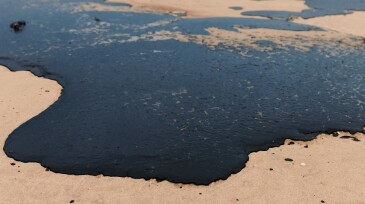
This research aims to harness the advanced capabilities of artificial intelligence, specifically deep learning and large language models, to develop a comprehensive system for detecting and explaining oil spills.