Field/project development

Assets consolidated into the Searah JV include Eni-operated deepwater gas-condensate developments in the Kutei Basin, offshore East Kalimantan, Indonesia.

Five agreements target more than 11 Tcf of offshore gas and include flare-reduction technology.
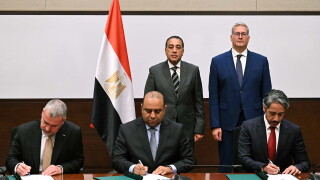
ExxonMobil and QatarEnergy’s MoU with Cairo to monetize Cyprus’ offshore Glaucus and Pegasus natural gas supports Egypt’s strategy to become the Eastern Mediterranean’s leading gas processing and LNG export hub.
-
 This paper reviews clusters of information that will be termed “building blocks” for deepwater-field-development planning, discussing how they are currently used and exploring more-affordable, but technically robust, alternatives.
 -
New figures show that the facilities working in the Gulf of Mexico achieved higher crude output in 2016 than at any other period.
-
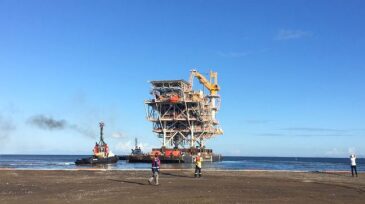
The new Juniper offshore platform began its journey toward Trinidad to be installed as BP Trinidad and Tobago LLC’s 14th offshore installation. Juniper will have a production capacity of approximately 590 MMscf/D.
-
In the first part of this series, the author explained why the current way of performing FEED does not allow minimization of costs by optimizing the design. In this article, he describes how the current contractual setup of the EPC also fails to minimize the costs of equipment/materials and works.
-
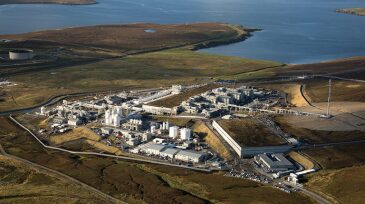
Total’s Laggan Tormore project claimed the International Petroleum Technology Conference (IPTC) Excellence in Project Integration Award at the 10th IPTC in Bangkok, Thailand.
-
In order to meet short- and medium-term expansion goals as well as ensure a sustainable long-term future, an operator has recently embarked on several greenfield and brownfield developments. These involve several megaprojects running in parallel with different teams.
-
In this first of a two-part series, the author describes why the use of lump sum contracts for FEED services contract followed by an EPC contract does not fulfil the requirements to lower oil and gas facilities capex.
-
Kashagan crude reached the global markets. The world’s most expensive upstream project restarted production and about 195,000 barrels, produced during the startup process, were shipped for export.
-
Applying an economic analysis for Trinidad and Tobago's deepwater gas fiscal regime, results were calculated for various price scenarios to identify a workable strategy for development of offshore resources.
-
Field-development projects need to include and consider not only a static or dynamic subsurface characterization but also the production-systems and facilities options, to trigger profitability and establish clear breakeven thresholds.