Field/project development

TotalEnergies has signaled its intent to reenter Venezuela after a 5-year absence, while Halliburton has teamed up with Brazil’s independent natural gas operator Evena and Venezuelan engineering firm WESCA to also assess business opportunities.

With funding opportunities improving, developers and researchers are focused on shortening project learning cycles and reducing uncertainty to attract more capital and speed deployment.

The US Department of Energy has awarded more than $99 million to 21 projects that will advance geothermal development through field-scale testing of next-generation technologies and exploration drilling programs across the US.
-
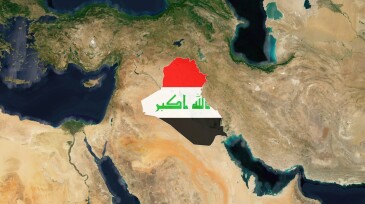
 The integrated field management services contract signals an evolution of KBR’s role at Majnoon from one of stabilizing production to a more complex and sophisticated role that takes responsibility for integrating full upstream operations.
 -
This paper describes modeling work performed to design fracturing treatment and spacing for wells in the Project Cape enhanced geothermal system in Utah.
-
Updates about global exploration and production activities and developments.
-
This paper reviews the simultaneous supercritical CO2/brine aquifer injection and water-alternating-gas methods for geologic carbon sequestration and proposes a novel integration with saltwater-disposal wells.
-
The objective of this study is to numerically investigate system behavior when storing H2/natural gas (CH4) mixtures in aquifer-related underground gas storage, and the effect of gas composition and salinity on energy-recovery efficiency.
-
In the past year, publications on CO2, natural gas, and hydrogen storage have increasingly focused on the design, evaluation, and optimization of storage plans. These efforts encompass a broad spectrum of challenges and innovations, including the expansion of storage reservoirs from depleted gas fields and saline aquifers to stratified carbonate formations and heavy-o…
-
In this paper, the authors review and draw lessons from the many firsts in the Teesside CO2 transportation and storage infrastructure project.
-
The award comes as a contract release purchase order under a long-term agreement that simplifies ongoing efforts to maintain mature field production in Saudi Arabia.
-
The development is expected to add approximately 39 million BOE in recoverable resources to the Solveig field.
-
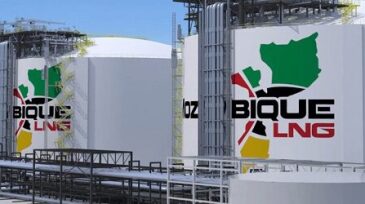
Suspended by force majeure since the spring of 2021, work on the Mozambique LNG project has restarted with over 4,000 workers now engaged onshore and offshore to meet a 2029 deadline for first LNG.