Flow assurance

Flow measurement touches almost every phase of oil and gas operations. Yet the industry still struggles to distinguish between what is directly measured, what is inferred, and what is estimated through models, correlations, or assumptions. That distinction matters. A measurement does not need to be perfect to be useful, but it must be fit for purpose.

This paper presents an engineering solution tailored for shallow-water oilfield development in Bohai Bay, addressing the confluence of spatial constraints, marginal economics, and environmental conditions that have rendered such reserves stranded.

This paper details the design and implementation of a subsea multiphase pump solution deployed in the Atlanta field designed to maximize reuse of existing subsea and topside equipment.
-
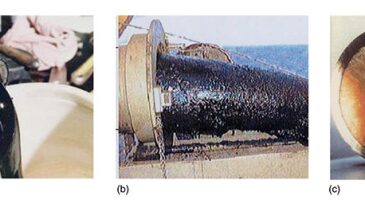
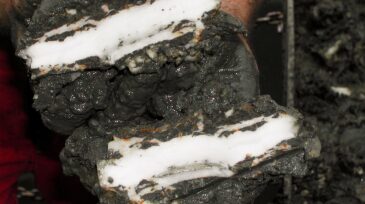
 Banyu Urip crude contains 26% wax, which can lead to flow-assurance challenges in a crude pipeline exposed to lower temperatures. Injection of pour-point-depressant (PPD) chemicals has been considered an effective method to ensure flow of moderate waxy crude.
 -
This paper presents a case study that is an example of how reassessing a flow-assurance risk-management strategy for operating assets can identify opportunities for optimization.
-
These balls have the potential to alter how pipeline inspections are done, and a consortium of pipeline operators and industry experts in North Dakota is examining just how well this emerging technology can handle the small-diameter pipelines in the area.
-
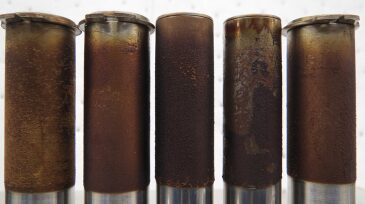
Cold finger tests are a standard method for testing paraffin inhibitors, but there is no standard testing protocol, and sometimes different labs can see inconsistent results. Shell and BHGE studied the root causes of these issues.
-
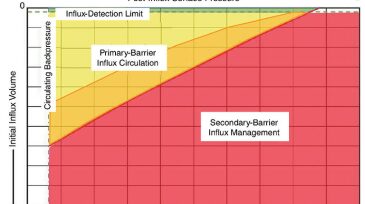
The influx-management-envelope (IME) concept is an advanced, innovative way to assess influx conditions in managed-pressure-drilling (MPD) operations, offering an improved tool for the decision-making process.
-
Offshore project execution enhancement ideas are highlighted for debottlenecking, gas-hydrate-induced pipeline vibration, and the design of subsea systems for efficient startup.
-
A computational fluid dynamics model is proposed to analyze the effect of hydrate flow in pipelines using multiphase-flow-modeling techniques. The results will identify the cause of pipeline failure, regions of maximum stress in the pipeline, and plastic deformation of the pipeline.
-
The 9th International Conference on Gas Hydrates featured discussions on key advancements in flow assurance, including the concept of risk management and anti-agglomerates being applicable strategies in transient operations.
-
In this study, the effects of the hydrodynamic parameters are decoupled with specially designed flow-loop experiments. The results enhance understanding of the deposition behavior at various hydrodynamic conditions and aid in scaling up from laboratory to field conditions.
-
In this study, two coatings were produced and evaluated to determine their effect on hydrate adhesion onto carbon-steel surfaces.