Flow assurance

Flow measurement touches almost every phase of oil and gas operations. Yet the industry still struggles to distinguish between what is directly measured, what is inferred, and what is estimated through models, correlations, or assumptions. That distinction matters. A measurement does not need to be perfect to be useful, but it must be fit for purpose.

This paper presents an engineering solution tailored for shallow-water oilfield development in Bohai Bay, addressing the confluence of spatial constraints, marginal economics, and environmental conditions that have rendered such reserves stranded.

This paper details the design and implementation of a subsea multiphase pump solution deployed in the Atlanta field designed to maximize reuse of existing subsea and topside equipment.
-
 This paper presents the traditional methods of hydrate mitigation used in the NKJ fields and the way in which a transient model was initially built and continuously improved.
 -
Mitigation of flow-assurance problems continues to drive new production-technology applications and approaches. The three papers highlighted here focus on minimizing costs while providing safe, effective, and reliable operations.
-
A BP flow assurance manager explains a methodology for determining and mitigating flow assurance risks.
-
Fluid Efficiency and Rhapsody Venture will partner to refine and launch a new molecular technology to improve the flow in pipelines.
-
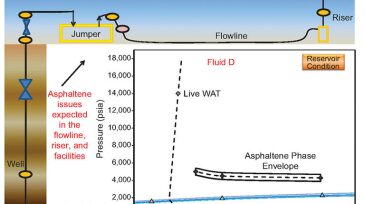
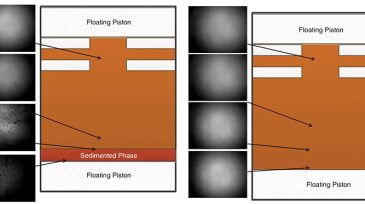
This paper presents an integrated approach to evaluate the key elements of asphaltene risk for deepwater projects, the strategy to manage the issues during production implementation, and aspects to be considered in the mitigation of asphaltene in the field-development plan.
-
This paper presents a methodology that begins by determining the ADE in the laboratory. Moreover, asphaltene-deposition rates for the tubing conditions can be measured using high-pressure/high-temperature coaxial-cylinder technology.
-
Sensor systems for pipeline inspections from Ingu and Rheidiant are among the initial selections to receive funding under Chevron’s CTV Catalyst Program.
-
The expanded research and testing capabilities offer the only vertical test rig for subsea safety valves and one of the largest high-pressure natural gas test facilities in the world.
-
A new complex at Southwest Research Institute will support fluid dynamics research and the development testing of flow components.
-
As operators rely on longer subsea tiebacks, an upward trend in the number of plugs caused by paraffins and hydrates has been seen. New prevention and remediation methods are discussed to help solve these challenges.