Flow assurance

Flow measurement touches almost every phase of oil and gas operations. Yet the industry still struggles to distinguish between what is directly measured, what is inferred, and what is estimated through models, correlations, or assumptions. That distinction matters. A measurement does not need to be perfect to be useful, but it must be fit for purpose.

This paper presents an engineering solution tailored for shallow-water oilfield development in Bohai Bay, addressing the confluence of spatial constraints, marginal economics, and environmental conditions that have rendered such reserves stranded.

This paper details the design and implementation of a subsea multiphase pump solution deployed in the Atlanta field designed to maximize reuse of existing subsea and topside equipment.
-
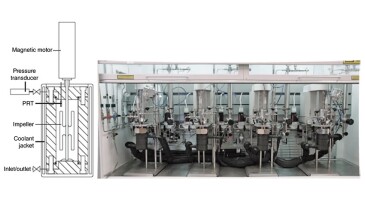
 This paper presents an approach to subsea hydrate-risk management based on the understanding that some crudes have induction properties that delay hydrate formation even when the pressure and temperature conditions reach the hydrate thermodynamic region.
 -
The advancement of flow-assurance technology can be characterized as a transition from reactive to proactive, from laboratory-scale examination to field applicability, and from data-driven to big data and physics integration.
-
The DeepOcean-lead joint industry project aims to advance commercialization of a new patented technology that heats pipeline systems deployed in deepwater where flow assurance can be a challenge.
-
In today’s era of asset management, digital twins are changing risk management, optimizing operations, and benefitting the bottom line.
-
This study contributes to enhancing the understanding of scale-inhibitor retention in rock formations.
-
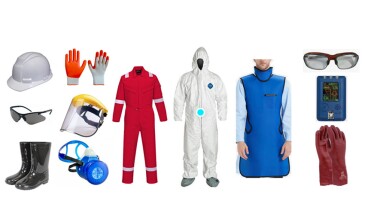
This paper describes a case history in the UAE in which the cleanout of scale contaminated with naturally occurring radioactive material was conducted successfully.
-
In the wake of the falling number of exploratory wells in the country, Brazil-owned Petrobras addressed audience concerns as well as outlined new avenues for production at the Offshore Technology Conference.
-
The authors of this paper describe a project to develop a virtual sensor to monitor the cooling effect downstream of a subsea choke to avoid hydrate plugs during cold-start operations.
-
Subject-matter experts from industry and academia advanced distributed fiber-optic sensing technologies and their implementation in flow measurement during a special session.
-
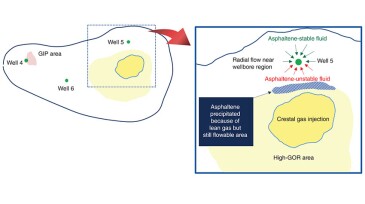
This paper reports the observation of stealth asphaltenes, a potential flow-assurance issue, by means of experimental analysis.