

Flow assurance

This paper details the importance and value derived from a real-time process-twin model for one of the world’s largest operating carbon dioxide sequestration projects.

This paper presents a comprehensive analysis of autonomous scale-management strategies implemented in the Buzios Field that eliminate the need for a well-service stimulation vessel by using existing facilities onboard the well rig.

This study demonstrates the transformative potential of physics-informed neural networks as a hybrid framework for multiphase flow measurement.
-
 Digital frameworks and autonomous operations are transforming the future of flow assurance.
-
A credible custody-transfer record depends on far more than the accuracy of a single meter. It is the product of an integrated measurement chain. While meter performance supports measurement-system integrity, commercial confidence also depends on traceability, governance, and authorization.
-
The 2026 Upstream Scale Guidelines establish a common workflow for field measurements, scale modeling, and risk assessment to support more consistent operational decisions.
-
Flow measurement touches almost every phase of oil and gas operations. Yet the industry still struggles to distinguish between what is directly measured, what is inferred, and what is estimated through models, correlations, or assumptions. That distinction matters. A measurement does not need to be perfect to be useful, but it must be fit for purpose.
-
This paper presents an engineering solution tailored for shallow-water oilfield development in Bohai Bay, addressing the confluence of spatial constraints, marginal economics, and environmental conditions that have rendered such reserves stranded.
-
This paper details the design and implementation of a subsea multiphase pump solution deployed in the Atlanta field designed to maximize reuse of existing subsea and topside equipment.
-
This paper describes the successful deployment of flexible coiled tubing technology in an oil-producing well of the offshore Frade field in Brazil’s Campos Basin.
-
This case study from Italian technology developer Sentris highlights the effectiveness of using sensors during pigging operations to optimize cleaning efficiency.
-
The objective of this study is to field test a non-nuclear multiphase flowmeter and assess its performance under challenging operating conditions.
-
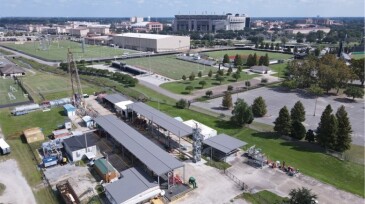
For more than a century, LSU has shaped petroleum engineering education, but few assets showcase its impact like the PERTT Lab. With six deep test wells and rare reservoir-depth gas-injection capabilities, the facility is helping drive breakthroughs in well control, carbon-dioxide injection, and next-generation energy technologies.





Page 1 of 16