Fracturing/pressure pumping

This paper focuses on a replicable, quantitative workflow using completions-process simulation software.

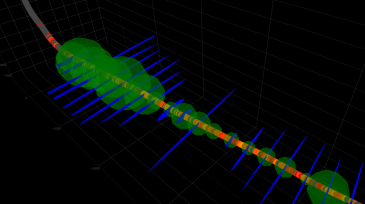
This paper presents a high-fidelity, reservoir-centric stimulation-to-production modeling workflow to prevent fracture-driven interactions.

This work elaborates on recommended practices for calibrating a numerical model to a set of available infill-well field observations.
-
 A new report expects US producers to drill their highest number of wells since 2014, and that completion activity may exceed drilling for the first time since 2016.
-
This paper describes a diagnostic fracture injection test-analysis program and the suitability of the results from ACAs for use in hydraulic-fracture design.
-
Diagnostic fracture injection tests (DFITs) incur direct and indirect costs resulting from the tests themselves and the extended time required for the pressure falloff, which delays the completion of the well. The benefits, therefore, must outweigh the costs if the test is to be justified.
-
Using drilling data and a downhole acoustic signal, developers aim to assess unconventional fracture networks in real time and give engineers ability to customize each stage.
-
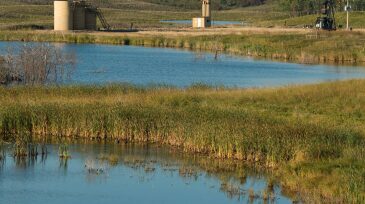
Water management for unconventional projects continues to evolve at a rapid pace. What are some of the universal trends industry is adopting to handle higher produced water volumes and increased demand, and how do local dynamics impact the adoption of these trends?
-
ProPetro closed its deal to purchase Pioneer’s pressure pumping fleet, boosting its services in the Permian Basin.
-
An oil and gas startup has attracted the business with a major operator thanks to its ability to forecast whether production-enhancing chemicals will work as advertised.
-
Producers in Texas have claimed an economic victory with their transition to local sands that they once avoided using in horizontal wells due to their low-quality.
-
Vaca Muerta production is on the upswing. Will increasing activity propel the Argentine play to the ranks of US shale? Data suggest it is both already there and has a ways to go.
-
Production and proved reserves in the Permian Basin’s Wolfcamp Shale and Bone Spring Formation are reaching new heights, and a new assessment from the US Geological Survey indicates the industry is just scratching the subsurface when it comes to what may be technically recoverable.