Fracturing/pressure pumping

Operators struggle to understand proppant placement beyond the fracture, and that’s the information that could be the key to boosting EUR.

High-risk, high-reward projects focused on stimulation, enhanced recovery, and field-scale deployment are eligible under the DOE’s new UNLOCK initiative.

The Seismos full-scale research center opens to industry, universities, and national laboratories, advancing acoustic sensing across upstream energy, pipelines, critical infrastructure, and national security.
-
 Oman is embarking on a renewed effort to deploy the latest hydraulic fracturing technologies and techniques, tailored to its unique reservoirs and challenges.
-
The agreement follows the discovery of 724 million BOE in unconventional oil and gas reserves in November.
-
Evolution Well Services will deploy electric pressure pumping units for Northeast Natural Energy, which operates in the Marcellus Shale.
-
Major increases in hydrocarbon production require both incremental and revolutionary technologies, industry leaders said during the SPE Hydraulic Fracturing Technology Conference.
-
Technology developers expect the tight-oil industry to give lightweight proppants another look after the Permian Basin’s biggest operator becomes an adopter.
-
This paper describes development of a high-temperature water-based reservoir drill-in fluid using a novel synthetic polymer and customized with optimal chemical concentrations and sized calcium carbonate.
-
In this case study, a geomechanics-based approach was used to create bridging and sealing at the fracture aperture using a biparticle self-degradable lost-circulation-fluid system.
-
The objective of this paper is to apply a developed workflow to determine the propped hydraulic fracture geometry in a horizontal multistage fractured well, incorporating production, pressure, and strain data.
-
In this third work in a series, the authors conduct transfer-learning validation with a robust real-field data set for hydraulic fracturing design.
-
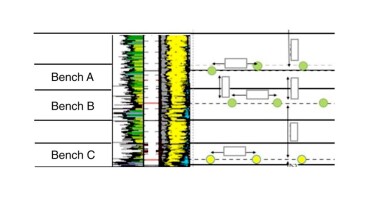
The aim of this study is to incorporate detailed geological, petrophysical, and hydraulic fracturing models to better predict and mitigate the effects of interbench interactions.