Health

With millions of wells having been drilled in the US since the beginning of the oil age, the land is pocked with old, unused wellbores. For most, repurposing is a pipe dream. Plugging is the best option.

This paper explores how artificial intelligence (AI), cognitive models, and integrated digital tools can transform readiness from periodic drills into a continuous, measurable capability.

This paper presents a competency-centered, data-driven approach implemented to strengthen control-room emergency-response capability through a cloud-hosted, scenario-based virtual plant simulator.
-
 Pennsylvania Gov. Tom Wolf has asked the state Department of Health to determine how best to spur additional academic and science-based studies of the potential public health effects of shale gas development in the state.
 -
Although OSHA does not have a specific standard that covers working in hot environments, the Occupational Safety and Health Act requires places of employment that are "free from recognizable hazards that are causing or likely to cause death or serious harm." This includes heat-related hazards.
-
Obstetrics are disappearing from rural counties across America, but not in the oil patch. In McKenzie County, North Dakota, Whiting Oil and Gas has donated to build a new wing of the McKenzie County Health Care Center devoted to labor and delivery.
-
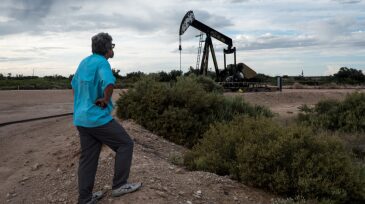
Carlsbad, New Mexico, residents are experiencing health effects, but the science behind their woes lags behind the pace of drilling.
-
The National Institute for Occupational Safety and Health has developed an evidence-based method that uses the criteria of "burden," "need," and "impact" to identify research priorities.
-
An examination of studies on air pollutants associated with oil and gas extraction finds that measurements near operational sites have generally failed to mark levels above standard health benchmarks; yet, many studies find poor health outcomes increasing as distance from these operations decreases.
-
In both developed and developing countries, noise is regarded as the most common occupational hazard in various industries. The present study aimed to examine the effect of sound pressure level on serum cortisol concentration in three different times during the night shift.
-
"I have some patients whose symptoms I can’t explain," physician Ulrike Meyer said, describing nosebleeds, rare cancers, and respiratory illness among a dearth of data.
-
A partnership between ConocoPhillips, Marathon Oil, and XTO Energy has resulted in the opening of a new clinic catering to the safety and health of oil and gas employees in Carlsbad, New Mexico.
-
Seadrill has announced implementation throughout its fleet of a health program designed for employees before they leave for work on one of the company’s rigs.