HSE & Sustainability

While Uzbekistan has seen a significant drop in flaring, methane leaks from deteriorating infrastructure continue to reveal themselves to satellites in space.

The department announced it plans to combine the Bureau of Offshore Energy Management and the Bureau of Safety and Environmental Enforcement into the Marine Minerals Administration.

While some idle wells may be brought back into production, many will be plugged and abandoned. This paper considers repurposing certain idle oil and gas wells by using their empty steel casing for the disposal of nuclear waste.
-
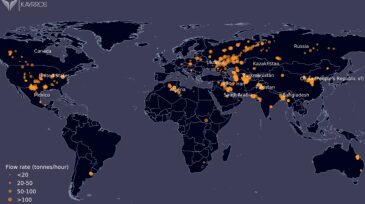
 Using a European Space Agency satellite, data analytics firm Kayrros pinpointed global locations of methane emissions and recorded a 32% increase in the overall volume of methane emitted from large leaks compared with the first 8 months of 2019.
 -
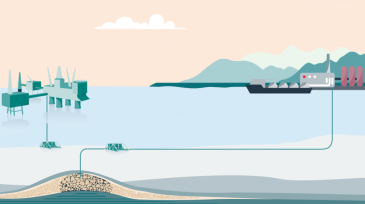
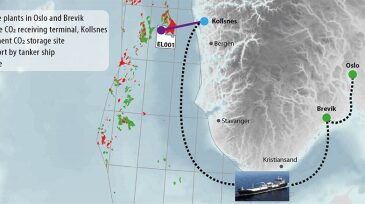
The memorandum of understanding with Microsoft follows a conditional investment decision in May that Equinor, Shell, and Total made for the carbon capture and storage project.
-
The memorandum of understanding with Microsoft follows a conditional investment decision made in May by Equinor, Shell, and Total. Pending Norwegian government approval, the final investment decision for the project is expected in late 2020 with startup expected in 2024.
-
Tough talk about World Bank financing for oil and gas is a sign of the growing pressure to squeeze investing in fossil fuels as a way to slash carbon emissions.
-
As the science has developed, accident-causation models have improved understanding of why accidents happen and how to reduce their likelihood. In more contemporary models, this approach also has been used to improve the understanding of why things go right and how to increase that likelihood.
-
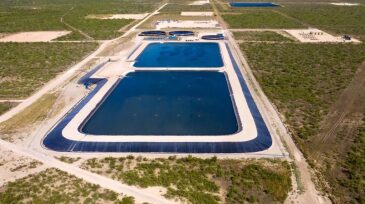
Breakwater’s produced-water-recycling facility has the flexibility to recycle, store, or dispose of water. It has already recycled nearly 5 million bbl of produced water in the third quarter of 2020.
-
Eni plans to reuse depleted hydrocarbon reservoirs in Liverpool Bay to permanently store CO2 captured in northwest England and North Wales.
-
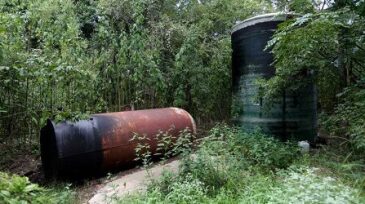
Plugging and cleaning up the open oil and gas wells in Texas could cost companies and taxpayers as much as $117 billion, according to a new report.
-
Total Chief Executive Officer Patrick Pouyanne called on European nations to help Mozambique fight an insurgency, backed by Islamic State, in part of the East African nation where the energy company is developing a natural gas project.
-
Extending and transferring the high-temperature capabilities of existing E&P technologies could make geothermal energy development possible—and scalable—anywhere in the world.