HSE & Sustainability

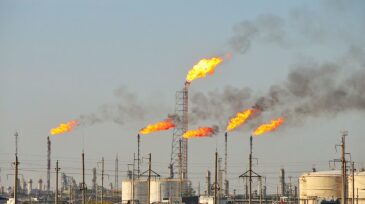
While Uzbekistan has seen a significant drop in flaring, methane leaks from deteriorating infrastructure continue to reveal themselves to satellites in space.

The department announced it plans to combine the Bureau of Offshore Energy Management and the Bureau of Safety and Environmental Enforcement into the Marine Minerals Administration.
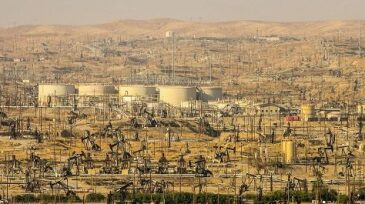
While some idle wells may be brought back into production, many will be plugged and abandoned. This paper considers repurposing certain idle oil and gas wells by using their empty steel casing for the disposal of nuclear waste.
-
 OTC announces Distinguished Achievement Awards for 2020.
 -
The SPE International Conference on Health, Safety, Environment, and Sustainability which was set for 17–19 March in Bogotá, Colombia, has been rescheduled for 28–30 July.
-
Toxic and invisible oil spread well beyond the known satellite footprint of the Deepwater Horizon oil spill, according to a new study led by scientists at the University of Miami Rosenstiel School of Marine and Atmospheric Science.
-
Texas Railroad Commissioner releases state's first flaring report.
-
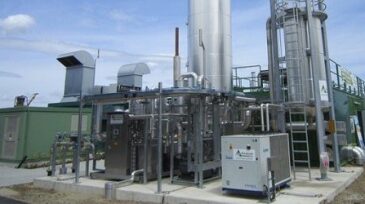
In the past, carbon capture and sequestration seemed to be going nowhere. Today, according to the Global CCS Institute, 19 large-scale commercial carbon capture and sequestration facilities are operating around the world, 10 of which are in the US.
-
This paper describes a multiyear program in an oilfield services company that has been incorporating sustainability into internal business processes and improving environmental performance through the application of continuous improvement techniques.
-
Chevron Technology Ventures has joined a consortium in a $16-million investment in a company that provides portable carbon-capture technology.
-
NGL Energy Partners announces acreage dedication for Delaware Basin water transport and disposal
-
A new study will identify the UK’s best sites and produce a roadmap for carbon storage to help the country reach its net zero targets, geologists say.
-
Coal, oil, and gas have given communities across the US both steady paychecks and devastating pollution. This essay makes the case for setting health as a priority in meeting our energy demands.