HSE & Sustainability

While Uzbekistan has seen a significant drop in flaring, methane leaks from deteriorating infrastructure continue to reveal themselves to satellites in space.

The department announced it plans to combine the Bureau of Offshore Energy Management and the Bureau of Safety and Environmental Enforcement into the Marine Minerals Administration.
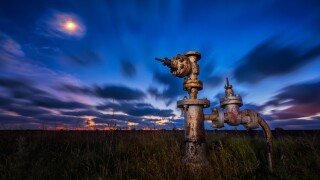
While some idle wells may be brought back into production, many will be plugged and abandoned. This paper considers repurposing certain idle oil and gas wells by using their empty steel casing for the disposal of nuclear waste.
-
 At a water treatment plant for an onshore oil field in northern Germany, formaldehyde injection was started in 2015 as a biocide. The goal of this study was to understand the chemical parameters and microbial distribution in the water system and whether formaldehyde injection was effective.
 -
For several decades, energy security has been defined and pursued in a multilateral world with relatively open markets and technology transfer, where energy relations have become increasingly commodified. But that world may soon disappear.
-
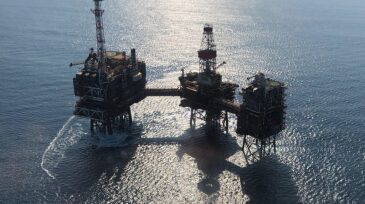
Serica Energy has become the first operator to digitize safety in the North Sea after signing a deal to adopt the Restrata Platform, a piece of technology that provides real-time monitoring of people and assets.
-
The report reveals there is no single pathway to a decarbonized energy mix. A combination of energy sources—primarily gas and renewables—will be the quickest route to delivering a supply of affordable, decarbonized energy in the lead-up to the midcentury.
-
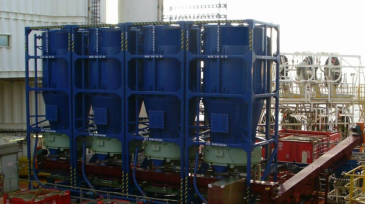
Safe and green innovations for handling hydrocarbon-contaminated cuttings are of great interest for offshore platforms. This paper describes a bulk transfer system that improves the safety of handling cuttings offshore and provides an environmentally acceptable approach to cuttings management.
-
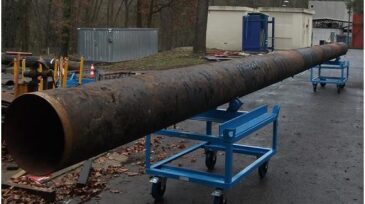
Fiber optics are considered one of the more promising direct leak-detection technologies. The fiber core normally used for telecommunication can be converted as a sensor using the principle of light backscattering within the fiber.
-
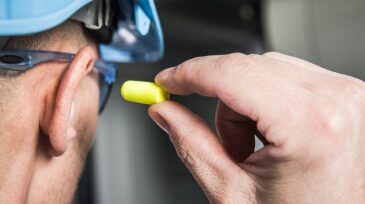
Hearing loss is prevalent in workers in the mining and oil and gas extraction sectors. Approximately 61% of workers in mining and oil and gas extraction have been exposed to hazardous noise levels on the job, according to a study published in the American Journal of Industrial Medicine.
-
BP announced that it will deploy continuous measurement of methane emissions in its future BP-operated oil and gas processing projects as part of its ambitious program to detect, measure, and reduce methane emissions.
-
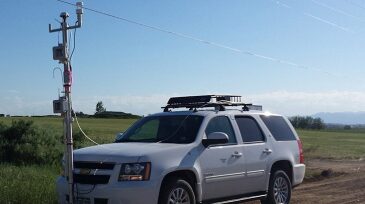
Mobile plume tracking, led by Colorado State University air pollution experts, is a key technology in the city of Broomfield’s ongoing Air Quality Testing Program. And it’s just one aspect of a 3-year, $1.7 million contract awarded by Broomfield last year.
-
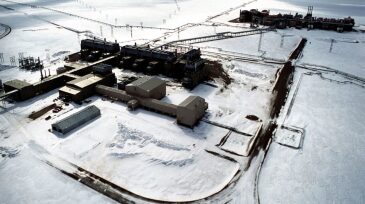
Snow depths on Alaska’s North Slope have thinned this year, the University of Alaska Fairbanks said in a study, creating a possible obstacle for exploration in part of the Arctic National Wildlife Refuge thought to harbor more than 7 billion bbl of oil.