HSE & Sustainability
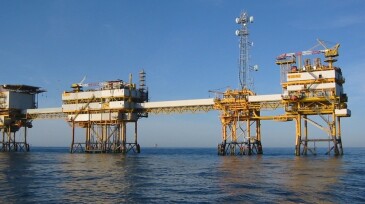
This paper identifies opportunities and risks associated with repurposing an offshore oil and gas platform for green hydrogen production. Various technical scenarios were investigated for the case study platform, and their profitability was determined using economic calculations. In addition, all the submodels were compared with standard decommissioning costs for reco…

This paper presents a flexible, highly cost- and energy-efficient method of gas separation and CO₂ capture from many different gas mixtures with a large range of CO₂ concentrations.

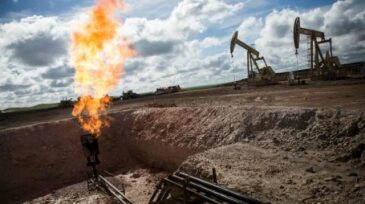
Emissions management covers a wide array of topics such as carbon capture, use, and storage; emissions monitoring; flare management; methods to improve operational efficiency; carbon accounting; and the effect of emissions management on global and local economics. The papers published in the past year span all these subcategories.
-
 A new funding opportunity is available for early-career researchers interested in safety and risk management issues related to offshore energy activities.
 -
Using CO2 as the geothermal power fluid to generate electricity from low-temperature abandoned hydrocarbon wells can help reduce well costs and optimize energy production. In this paper, a previously developed coupled well/reservoir model is extended to study the effects of fluid properties on thermal output.
-
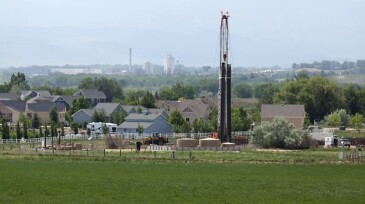
A group of public health experts from several universities and organizations urges adoption of a multilayered approach when developing policies to mitigate the effects of gas and oil production operations.
-
The Oil and Gas Methane Partnership 2.0 counts more than 80 upstream companies as members, representing more than 30% of global production.
-
The two organizations recently signed a letter of cooperation. The agreement creates an opportunity to accelerate the practical application of human factors in the energy industry and create a bridge between energy industry professionals and human factors experts.
-
The supplemental environmental impact statement offers multiple ways forward for the stalled project.
-
HiberHilo will be used to monitor remote oil and gas wells in Papua New Guinea, providing real-time performance and safety data.
-
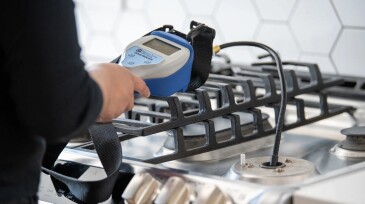
While the concentrations are low, the chemicals are potentially dangerous and some are linked to cancer risk, the researchers found.
-
Together in Safety’s recent report “Future Fuels Risk Assessment” uses operational scenarios across industries to evaluate the safety implications of using methanol, LNG, hydrogen, and ammonia as fuel.
-
Neptune Energy, ExxonMobil, Rosewood, and EBN have agreed to cooperate on the L10 Carbon Capture and Storage project in the Dutch North Sea.