HSE & Sustainability

SPE Journal is seeking submissions for a special issue on sustainable enhanced oil recovery (EOR), highlighting innovations that boost oil recovery while reducing CO2 emissions and environmental impact. The Call for Papers opens on 15 October 2026.

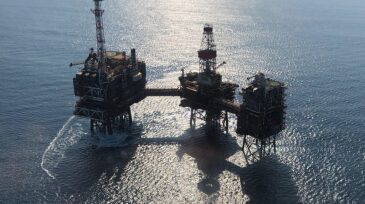
This paper identifies opportunities and risks associated with repurposing an offshore oil and gas platform for green hydrogen production. Various technical scenarios were investigated for the case study platform, and their profitability was determined using economic calculations. In addition, all the submodels were compared with standard decommissioning costs for reco…

This paper presents a flexible, highly cost- and energy-efficient method of gas separation and CO₂ capture from many different gas mixtures with a large range of CO₂ concentrations.
-
 To solve the world’s biggest challenges, such as climate change and inequality, the business community will have to play a critical role. Last month, nearly 200 CEOs declared that the purpose of business is no longer just maximizing shareholder profit. But are they ready to follow through?
 -
Large-scale investment in carbon capture and methane-emission reduction tops the agenda of the Oil and Gas Carbon Initiative, an organization led by chief executives of several major oil and gas companies.
-
A new documentary exploring men’s mental health in the oil industry takes a look at the toll that long hours and isolation can have on workers.
-
The signed framework agreement would have GHGSat use its satellite-based sensors to monitor greenhouse gases coming from select Shell facilities.
-
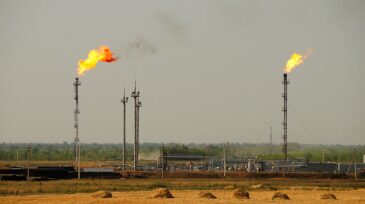
The value of natural gas flared by 80 different nations around the world has increased by 11% to hit a global peak this year of $16.4 billion, according to a new data analysis.
-
At a water treatment plant for an onshore oil field in northern Germany, formaldehyde injection was started in 2015 as a biocide. The goal of this study was to understand the chemical parameters and microbial distribution in the water system and whether formaldehyde injection was effective.
-
For several decades, energy security has been defined and pursued in a multilateral world with relatively open markets and technology transfer, where energy relations have become increasingly commodified. But that world may soon disappear.
-
Serica Energy has become the first operator to digitize safety in the North Sea after signing a deal to adopt the Restrata Platform, a piece of technology that provides real-time monitoring of people and assets.
-
The report reveals there is no single pathway to a decarbonized energy mix. A combination of energy sources—primarily gas and renewables—will be the quickest route to delivering a supply of affordable, decarbonized energy in the lead-up to the midcentury.
-
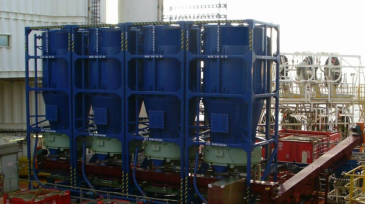
Safe and green innovations for handling hydrocarbon-contaminated cuttings are of great interest for offshore platforms. This paper describes a bulk transfer system that improves the safety of handling cuttings offshore and provides an environmentally acceptable approach to cuttings management.