HSE & Sustainability

SPE Journal is seeking submissions for a special issue on sustainable enhanced oil recovery (EOR), highlighting innovations that boost oil recovery while reducing CO2 emissions and environmental impact. The Call for Papers opens on 15 October 2026.

This paper identifies opportunities and risks associated with repurposing an offshore oil and gas platform for green hydrogen production. Various technical scenarios were investigated for the case study platform, and their profitability was determined using economic calculations. In addition, all the submodels were compared with standard decommissioning costs for reco…

This paper presents a flexible, highly cost- and energy-efficient method of gas separation and CO₂ capture from many different gas mixtures with a large range of CO₂ concentrations.
-
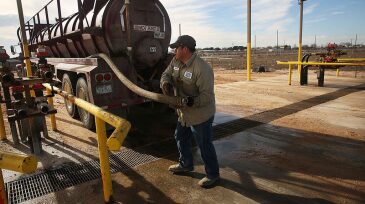
 As Permian production ramps up and saltwater disposal well capacity is pushed to its limit, companies see a need to develop collaborative, commercially viable methods of handling produced-water volumes. If reuse remains at its current rate of only 15%, operators could face a $30-billion tab.
 -
The biennial SPE Offshore Europe conference will explore a diverse set of topics, including the application of digital technologies and preparing for a low-carbon energy future and ongoing work around standardization and decommissioning.
-
The SPE Strategic Plan 2018–2023 calls for claiming pride in our industry’s higher purpose, that of supplying energy to meet the needs of humanity.
-
In recent years, some effort has been made to use EOR techniques, particularly CO2 injection, to extract additional oil and gas from unconventional resources. This has the potential to change the dynamics (again) of oil production from these tight and difficult reservoirs.
-
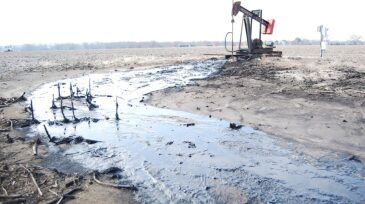
The number of deserted oil and gas wells in Kansas blossomed during the past 5 years to 22,000. A Kansas Corporation Commission annual report revealed a fund created in 1996 to finance plugging of wells to be inadequate if the objective was to keep pace with demand for plugging.
-
The well count and completion intensity of US tight oil and gas operations have grown in recent years, and rising pressure from environmental regulations means that produced water management has become a key focus for operators.
-
When surface water is scarce, communities and industries typically turn to groundwater to meet their freshwater needs. A new report from the Groundwater Protection Council indicates that produced water may be a new resource to reduce the use of fresh water for some of those needs.
-
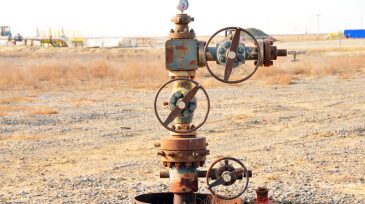
A new regulation includes provisions related to the timely abandonment of "dormant sites," a new site classification that refers to inactive wellsites operated by solvent companies.
-
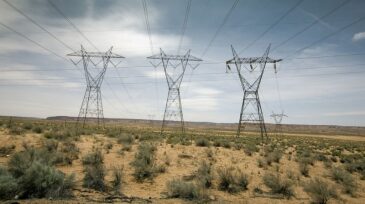
In a new troubling escalation, hackers behind at least two potentially fatal intrusions on industrial facilities have expanded their activities to probing dozens of power grids in the US and elsewhere, researchers with security firm Dragos reported.
-
Pennsylvania Gov. Tom Wolf has asked the state Department of Health to determine how best to spur additional academic and science-based studies of the potential public health effects of shale gas development in the state.