HSE & Sustainability

SPE Journal is seeking submissions for a special issue on sustainable enhanced oil recovery (EOR), highlighting innovations that boost oil recovery while reducing CO2 emissions and environmental impact. The Call for Papers opens on 15 October 2026.

This paper identifies opportunities and risks associated with repurposing an offshore oil and gas platform for green hydrogen production. Various technical scenarios were investigated for the case study platform, and their profitability was determined using economic calculations. In addition, all the submodels were compared with standard decommissioning costs for reco…

This paper presents a flexible, highly cost- and energy-efficient method of gas separation and CO₂ capture from many different gas mixtures with a large range of CO₂ concentrations.
-
 The emotional involvement of participants during the initial phase of a safety campaign increases implementation effectiveness significantly. In this case, a film guides the audience to make positive, personal choices whenever planning and operating a work at height.
 -
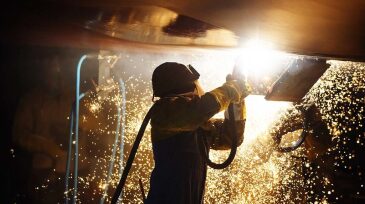
This paper describes an operator’s experience with HFE during the construction and fabrication/installation phase of projects, including welding during the fabrication of buoyancy tanks, emergency preparedness, and the use of 3D model walk-throughs.
-
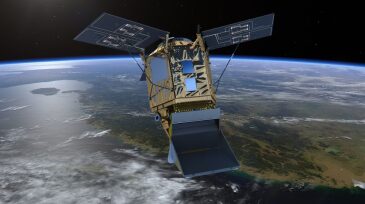
A wave of satellites set to orbit the Earth will be able to pinpoint producers of greenhouse gases, right down to an individual leak at an oil rig.
-
A new integrated modeling tool helps Canada analyze methane emissions to get a better understanding of the economic and environmental implications.
-
A bipartisan group of senators introduced a bill to increase federal funding toward developing carbon capture technology while also committing to fossil fuel use.
-
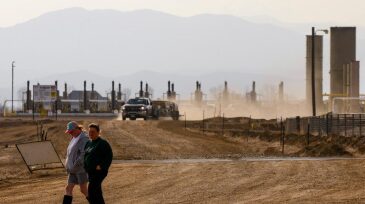
State health officials say they will review whether exemptions for the fossil fuels industry violates the Clean Air Act.
-
An examination of studies on air pollutants associated with oil and gas extraction finds that measurements near operational sites have generally failed to mark levels above standard health benchmarks; yet, many studies find poor health outcomes increasing as distance from these operations decreases.
-
Scientists from the University of East Anglia have discovered a unique oil-eating bacteria in the deepest part of the Earth’s oceans—the Mariana Trench.
-
In both developed and developing countries, noise is regarded as the most common occupational hazard in various industries. The present study aimed to examine the effect of sound pressure level on serum cortisol concentration in three different times during the night shift.
-
The company's 2019 report reinforces the strategic importance of responsible oil and natural gas development while investing in local communities.