HSE & Sustainability

This paper presents a flexible, highly cost- and energy-efficient method of gas separation and CO₂ capture from many different gas mixtures with a large range of CO₂ concentrations.

Emissions management covers a wide array of topics such as carbon capture, use, and storage; emissions monitoring; flare management; methods to improve operational efficiency; carbon accounting; and the effect of emissions management on global and local economics. The papers published in the past year span all these subcategories.

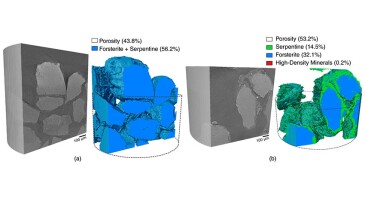
This study explores the carbon-capture and mineralization potential of ultramafic rock powders when exposed to flue gases generated from combustion of crude oil and mesquite-derived charcoal.
-
 Decarbonation has maintained its attraction, as observed from the past year of papers reviewed for this feature. Regarding CCS, challenges have been addressed through various techniques, including laboratory experiments; modeling studies; and field-scale application testing, monitoring, and risk assessment; as well as value chain and economic analysis.
 -
Shell became the first international company to operate producing fields offshore Brazil and the first to navigate the country’s complex and detailed decommissioning permitting process, which involved extensive environmental assessments, regulatory approvals, and coordinated stakeholder engagement.
-
This paper aims to describe the role of liquefied natural gas as a transitional energy source for automobile transportation in Nigeria.
-
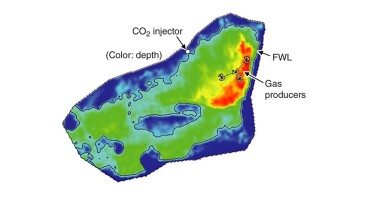
The authors present an efficient workflow using an embedded discrete fracture model to simulate carbon-dioxide flow by use of conductive faults.
-
This study concludes that it is relatively easy to generate enhanced hydrogen in the laboratory during injection of high-pH aqueous solution through a pack of olivine sand.
-
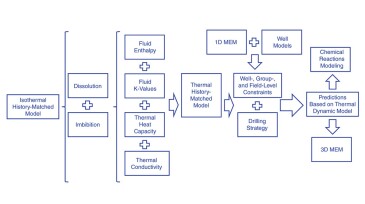
This paper provides guidelines for thermal modeling for carbon capture and storage projects in a depleted gas field.
-
The authors of this paper present a workflow designed to achieve maximum integration between analytical and modeling activities in carbon capture and storage projects.
-
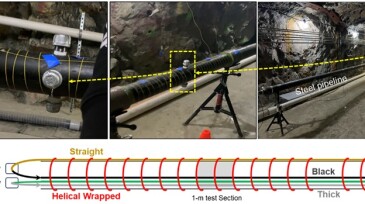
Unlike traditional inspection methods, distributed fiber-optic sensing offers continuous, real-time monitoring capabilities, allowing for early detection and response to potential leaks, which is especially crucial in remote or inaccessible locations.
-
The SPE Reservoir Technical Discipline and Advisory Committee invite their Reservoir members worldwide to participate in a new survey aimed at assessing the current state of reservoir engineering across industry and academia. Deadline is 21 July 2025.
-
Technical safety standards are essential as global offshore exploration heats up.