HSE & Sustainability

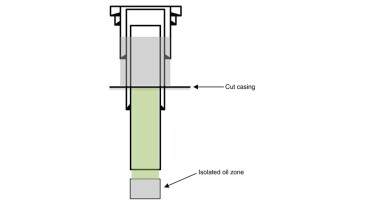
This paper presents an approach for safe, efficient, and cost-effective legacy well reabandonment.

This paper presents a flexible, highly cost- and energy-efficient method of gas separation and CO₂ capture from many different gas mixtures with a large range of CO₂ concentrations.

Emissions management covers a wide array of topics such as carbon capture, use, and storage; emissions monitoring; flare management; methods to improve operational efficiency; carbon accounting; and the effect of emissions management on global and local economics. The papers published in the past year span all these subcategories.
-
 Industrialization typically carries the blame for causing the water crisis across the continents, but it also creates and shepherds the innovation and introduction of a plethora of technologies and tools that enable intelligent use of water, intuitive approaches to conserve it, and implementable practices that preserve the watershed and prolong the life of aquifers.
 -
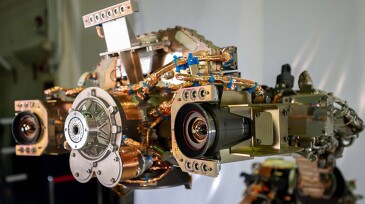
One is on Earth, and one is not. But the knowledge transfer between the oil patch and off-world has fueled meaningful technological advances for all involved.
-
This paper describes a method to manage high-salinity produced water in an environmentally sustainable way by extracting potable water and reducing discharge water volume by at least 50%.
-
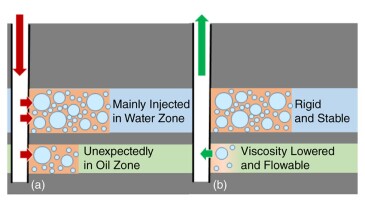
This paper presents the evaluation results of a water-shutoff agent based on an emulsion-type chemical material with nanoparticles.
-
This paper discusses housing pulverized blades mixed with Portland cement in wells considered for plugging and abandonment.
-
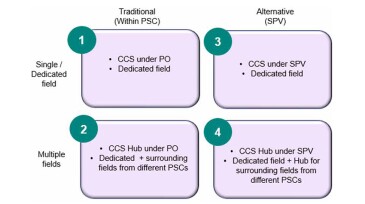
This study compares, in a carbon capture and storage (CCS) context, the economics of a traditional business model vs. an alternative business model (a regional CCS hub separately managed by a special-purpose vehicle).
-
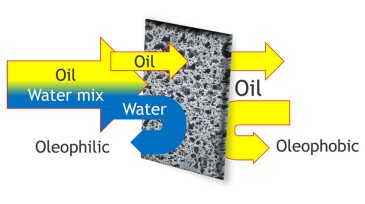
The authors of this paper discuss the use of dissolved polystyrene waste for the preparation of nanomembranes for separation of hydrocarbon pollutants from wastewater streams.
-
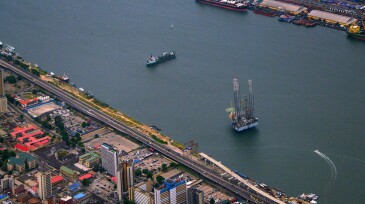
This paper discusses the importance of modular refineries and their effects on the availability of petroleum products in Nigeria.
-
A surge in permit applications for long-term carbon storage sites reflects where industrially produced carbon dioxide can be harvested, and where the necessary pipelines are.
-
The captured carbon dioxide will be permanently sequestered in the Cameron Parish CO2 Hub to be located offshore Louisiana.